Early last week, the last lingering remnants of snow and ice from the Christmas Blizzard of ‘09 disappeared from the north side of our house. Sustained temperatures above freezing and a generous amount of rain caused even the largest of the ice mountains in area parking lots to melt.  I have commented in the past about how much I like snow.  Our family missed the big snow storm, having traveled to Mississippi on December 23 for Christmas.  However, there was still plenty on the streets and ground when we returned.  Despite my fondness for snow, I must admit that it loses a significant amount of appeal to me after it has been on the streets for a week or more.  Its bright whiteness begins to fade into a dingy gray, and then the combination of automobile exhaust, oil, leaves, and generic grime changes it into a most unattractive, gritty black mass.  There is no possible way to restore it to its pristine beauty.  It just has to melt.  I much prefer a fluffy, freshly fallen blanket of the white stuff on the lawn, with snowy accents decorating  the shrubs and trees.

Counter to the unbiblical notion of original sin, we come into this world spiritually clean and pure and in the bonds of fellowship and relationship with our Creator.  As we age and mature, we develop a sense a moral accountability, with an ability to discern right from wrong and to distinguish good from evil.  From that point on, all of us who  possess that level of cognition and moral understanding ultimately choose to do evil and refrain from doing good (Psalm 14:2-3; Romans 3:23).  The purity of our souls becomes tainted with sin, and our intimacy with our God is compromised by our transgressions.  It is the spiritual equivalent of the soiled and blackened week-old snow and ice along the roadside. 

Scripture is unanimous in its affirmation that we possess no ability or resource within ourselves to take away the guilt of our sins.  But, it is also unanimous in its joyful proclamation that God has graciously provided the powerful, atoning sacrifice of His Son so that we can “wash our robes and make them white in the blood of the Lamb” (Revelation 7:14).  “Come now, and let us reason together,” says the Lord. “Though your sins are as scarlet, they will be as white as snow; though they are red like crimson, they will be like wool” (Isaiah 1:18).  No matter how dark our sins or how serious our transgressions, the cleansing blood of Jesus can restore us to purity, freshness, and spiritual wholeness.  Praise God for His salvation in Jesus Christ!
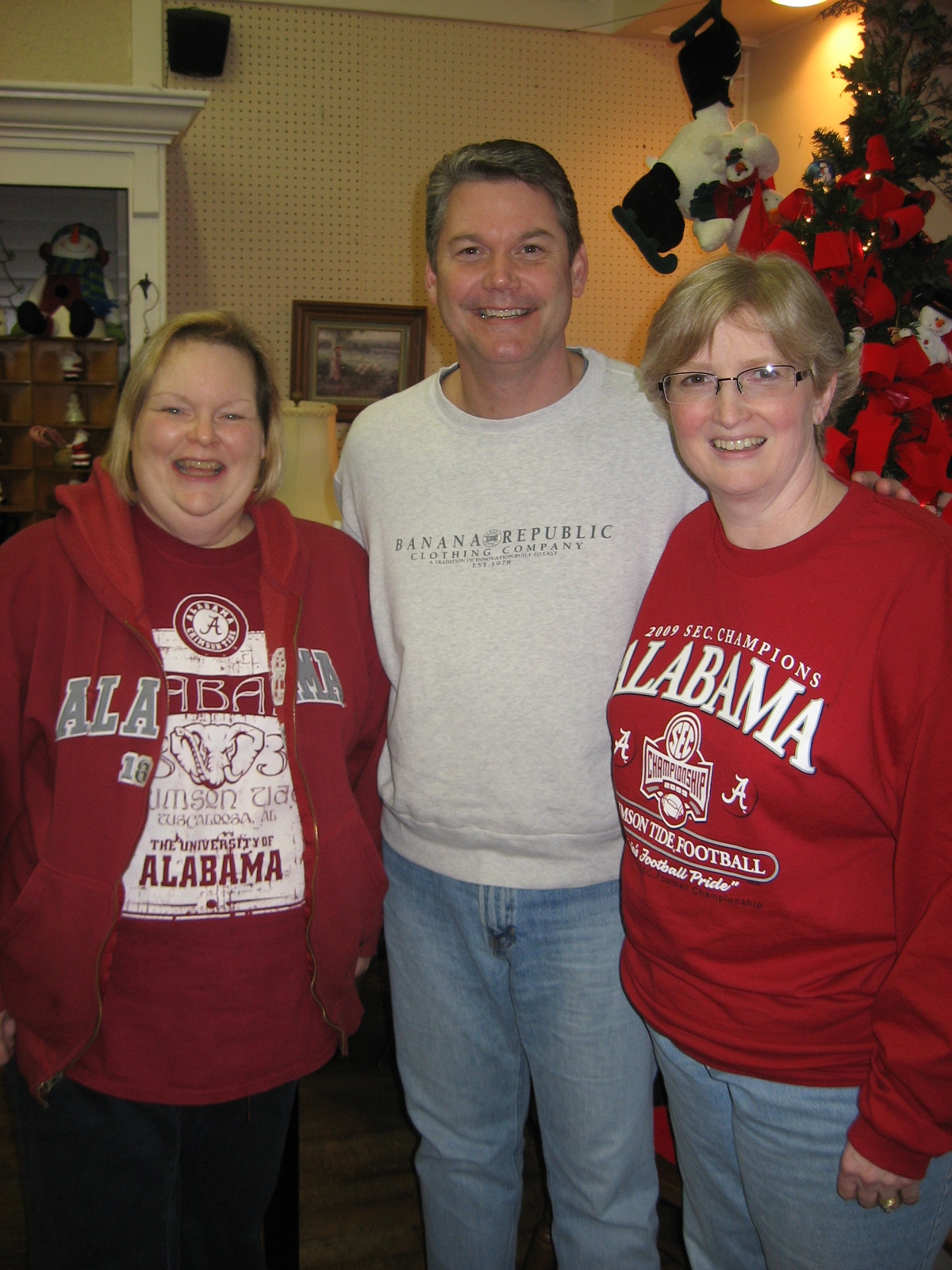
Truffles Co-Owners Carla (l) and Amy (r)

In late November, I shared a post about the extra mile service that was provided by a Good Samaritan named Amy in Cullman, Alabama.  Since neither my family nor my sister’s was going to be with my parents on Thanksgiving, I was trying to find a restaurant that would deliver Thanksgiving dinner to them.  The Chamber of Commerce put me in contact with a local catering business named Truffles.  I called and learned that, just like every other business in town, Truffles was going to be closed on Thursday.  However, co-owner Amy graciously (and totally unexpectedly) offered to deliver a couple of meals to my folks from the food she would be preparing at home for her family.  True to her offer and her word, Amy showed up at my parents’ house on Thanksgiving afternoon with turkey, dressing, mashed potatoes, green beans, rolls, and pumpkin pie.   I was completely blown away by Amy’s compassion and kindness and her willingness to provide second mile service to total strangers on Thanksgiving.

The week after Christmas, our family traveled to Cullman to spend a few days with Mom and Dad.  Kim and I took the opportunity one afternoon to stop by Truffles in order to meet and personally thank Amy.  She and co-owner and friend Carla were there, and we enjoyed a really nice visit with them.  We learned that they shared Mississippi roots with Kim. 

Before we left, Amy told us that she had a cousin, Susan, also from Mississippi, who owned and operated a home decor and gift shop in Tulsa.  What are the chances?!?  Understand that Cullman is 600 miles from Tulsa.  Amy gave us Susan’s business card.  The name of her shop is Tea and Magnolias.  Kim knew exactly where the shop was.  It is a mile and a half from our house!  We plan on making a visit there, too.  I’ll let you know if any other amazing connections are found that keep the Second Mile story going!

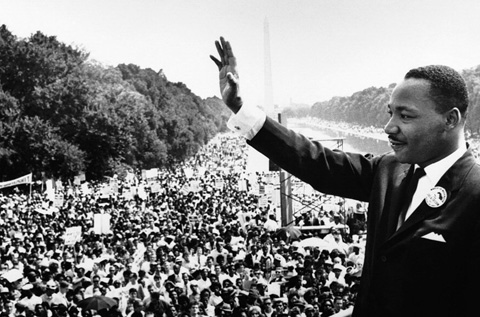
Today, as it has since 1986, our nation observes Martin Luther King, Jr. Day in honor of a man who devoted his life to seeking racial equality and the overturning of prejudicial injustices through the means of civil disobedience and non-violent resistance.  His life was brought to a premature end by an assassin’s bullet on April 4, 1968, in Memphis, Tennessee.  King was only 39.  

I was less than a year old when Martin Luther King, Jr., stood in front of the Lincoln Memorial and delivered his powerful and inspiring “I Have a Dream” speech during the March on Washington on August 28, 1963.  It would be a decade later before I first read the speech and began to understand why it is considered to be among the most notable and influential in American history.  King dreamed of a day when America would “rise up and live out the true meaning of its creed: We hold these truths to be self-evident, that all men are created equal.”  He dreamed of a day when his four children would live in a nation “where they will not be judged by the color of their skin, but by the content of their character.”  Over the last 46 years, much of King’s dream has been realized, but much still remains to be fulfilled.

I consider it a blessing that, even though I grew up mainly in the Deep South, I was shielded in my early years from the pervasive poison of racism by parents whose behavior and language treated all people with dignity and respect, regardless of the color of their skin.  As a young boy, I accompanied my father to black churches where he had appointments to preach.  When my parents served as missionaries in Liberia, West Africa, in the early 1970s, I attended the American Cooperative School (ACS) which had an international student body.  There were a dozen or more nationalities represented in my class.  In the fourth and fifth grade, I had a huge crush on a young lady named Zinnah Holmes, the prettiest girl in the class and also the best athlete, male or female.  Upon returning to central Kentucky in 1974, I showed a friend my yearbook and acknowledged my affection for Zinnah.  His response was, “Tim, she’s black.”  Either I had never noticed, or it never mattered.

As I grew older, my naiveté gave way to the sad realities of racism and the tragic role that slavery had played in American history.  Even the brilliant Thomas Jefferson, the chief architect of the Declaration of Independence which celebrated the equality and unalienable rights of all men, found a way to morally justify the holding of a multitude of slaves.  I heard racial epithets and the propagation of senseless stereotypes.  In the basement of a building at the Christian university I attended, there was a door which still bore the imprint of a sign which had read “Colored Men.”  It was the door to a separate restroom.  The sign was gone, but the evidence of past inequities remained.  Early in our marriage, Kim worked for a family, providing childcare and doing some light house cleaning.  In straightening the master bedroom one day, she found Klan pamphlets and propaganda under the edge of the bed.  She quit that day, out of both fear and disgust.  

Party, politics, and policies aside, I am very grateful that I have lived to see African Americans serve at the highest levels of our national government, including the Supreme Court and the Presidency.  I believe that Martin Luther King, Jr., would be proud of such progress.  But, there is still much to be accomplished in erasing the vestiges of prejudice and racism.  King once lamented that 11 o’clock on Sunday morning was the nation’s most racially segregated hour, the worship hour in America’s churches.  The truth of that observation hasn’t changed much over the last four decades.

Today, as Martin Luther King, Jr. Day is observed, I pray that the dream is still alive.  And I pray that I have the kind of heart, language, and behavior that will help it become more fully realized.

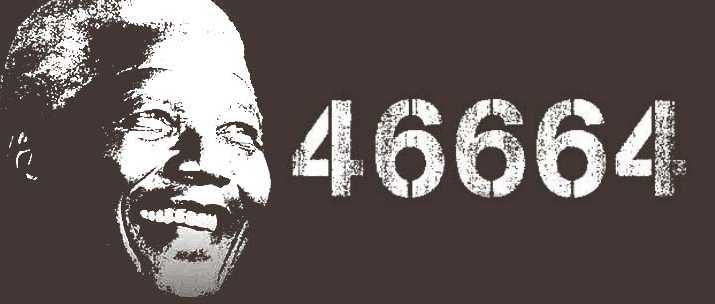
In the recent film Invictus, Francois Pienaar (played by Matt Damon) wonders aloud, “how you spend 30 years in a tiny cell and come out ready to forgive the people who put you there.”  Pienaar was the Afrikaner captain of the Springboks, South Africa’s national rugby team, who were preparing to meet New Zealand in the finals of the 1995 Rugby World Cup.  The subject of his amazement and admiration was South African President Nelson Mandela, played by Morgan Freeman.  Mandela (prisoner number 46664) spent 27 years in prison, with most of those years served on Robben Island off the coast of Cape Town.  Kim and I had the opportunity to spend the entire month of January 1990 on an evangelistic campaign in Cape Town and Port Elizabeth.  Near the end of the month, there were daily headlines detailing growing rumors of Mandela’s impending release.  His freedom came on February 11.  Just four years later, he was elected as South Africa’s first black President in 1994.

Invictus is a powerful film that focuses on Mandela’s efforts to bring about racial reconciliation and healing.  Violence and hatred had existed for decades on both sides of Apartheid’s racial barriers.  It is remarkable how much positive ground was gained through Mandela’s leadership and how much the Springboks run through the Rugby World Cup did to bring the nation’s people together.

Back to Pienaar’s question: “How do you spend 30 years in a tiny cell and come out ready to forgive the people who put you there?”  When I heard that line delivered by Damon in the film, my mind immediately connected to another question, one that causes me to feel a simultaneous sense of awe and shame.  “How can the spotless Lamb of God, the only true innocent one who has ever lived, willingly go to a cross to suffer an excruciatingly violent and painful death, and ask for the forgiveness of those who put Him there.”  “Father, forgive them.  They do not know what they are doing.”

I preach and teach a lot about forgiveness, but sometimes I struggle with it.  I don’t have difficulty with receiving it, mind you.  That is quite easy, and I am most eager to accept it.  It is in the dispensing department that I am sometimes found lacking, especially when I feel like I have been misunderstood, unappreciated, or treated unfairly.  Theologically and intellectually, I can convince myself that I have forgiven.  Then my feelings or obsessive thoughts about a situation will remind me that I have not yet released it, and I am harboring things that can only do me spiritual and emotional harm. 

The example of Nelson Mandela inspires me and demonstrates to me that I can forgive.

The example and teaching of Jesus humbles me, shames me, and reminds me that I must forgive. 

Lord, Teach Us.  Lord, Convict Us!

P.S.  Friend and fellow blogger Bobby Ross recently posted thoughts about Invictus.  Friend and fellow blogger Mike Willoughby recently wrote about dealing with life’s unfairness.  Read both for great insights.  Thanks, brothers!

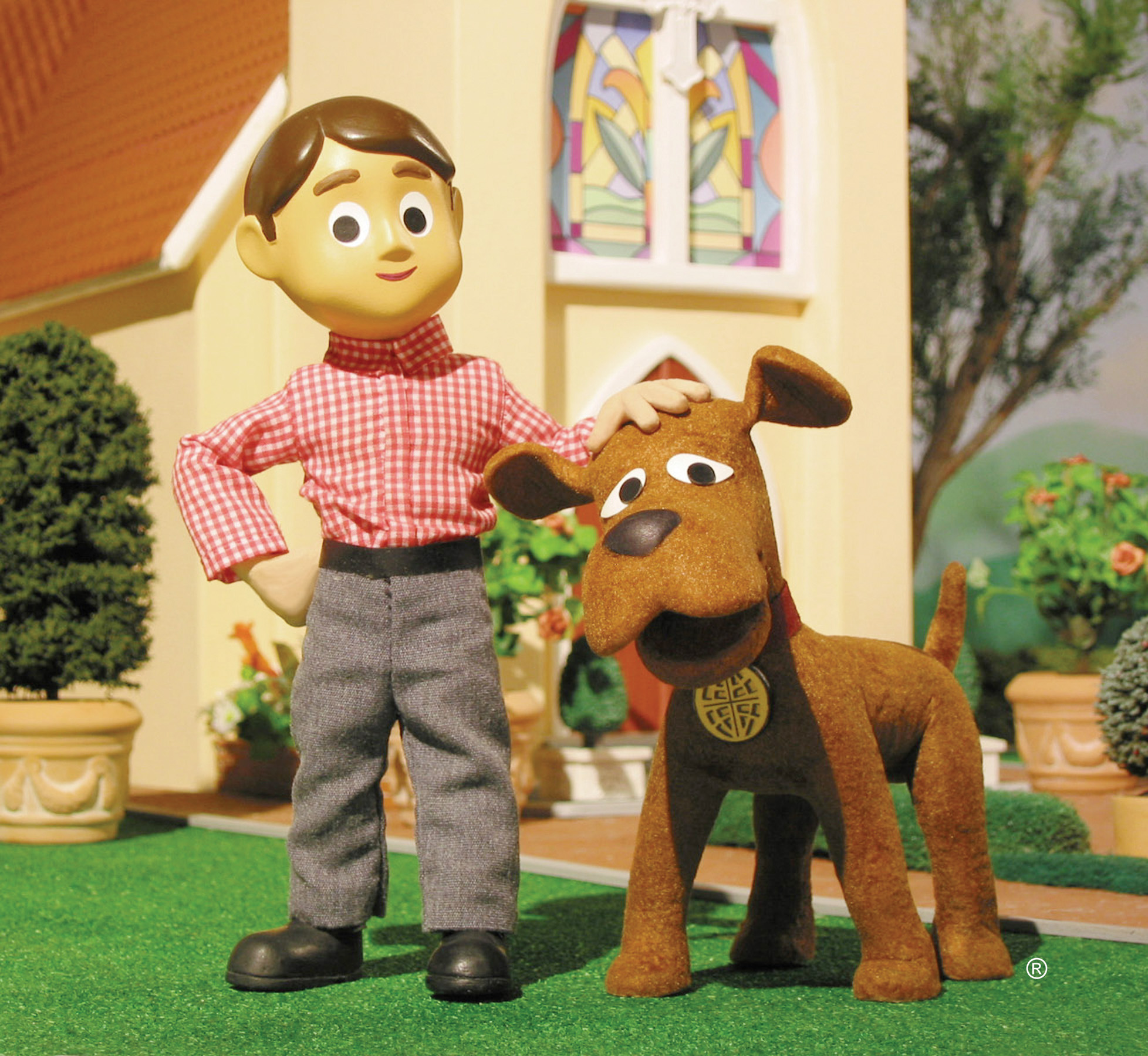
Last Friday, Art Clokey, the creator of Gumby and Pokey, passed away at the age of 88.  It was only while reading the report of his death that I learned that Clokey was also responsible for some other clay animation characters that I vividly remember from my childhood.  The success of “The Adventures of Gumby” in the 1950s led officials from the United Lutheran Church in America to approach Clokey with an invitation to join them in producing a Christian-themed, children’s television series using his highly successful stop-motion animation techniques.  The result was “Davey and Goliath.”  On those few occasions when illness kept me home from church services on Sunday mornings when I was a child, one of the upsides was the rare opportunity to watch an episode of Davey’s adventures with his talking dog named Goliath.  Yeah, I know: too sick for church, but quite well enough to watch tv!  Whatever.  You did it, too, I’m sure! 

Even at that young age, I recognized that “Davey and Goliath” was different from the other children’s programming that I watched.  While certainly not “preachy,” the storylines included lessons about behavior, attitudes, and treatment of others that sounded a lot like the things we talked about in Sunday School.  I was too young, however, to pick up on the fact that the music at the beginning of the show was Martin Luther’s “A Mighty Fortress Is Our God.”

Clokey’s passing gave me an opportunity to reflect on those who have contributed their creative, artistic, and technical abilities in order to communicate, illustrate, and “bring to life” the message of Scripture and share lessons about Christian ethics and morality.  These efforts range from the Sistine Chapel to VeggieTales (i.e., Michelangelo to Mr. Lunt).  Do you remember the illustrated Bible story books that used to be found in doctors’ and dentists’ offices?  Flannelgraphs?  Flip charts?  Film strips?  Then came materials on VHS, and now DVD.  Recently, there have been successful, church-funded and produced films like Facing the Giants and Fireproof.   Many of us can remember when Hollywood spent millions to put Biblical epics on the big screen.  I recall a teenager excitedly asking my father one day if he had seen Cecil B. DeMille’s The Ten Commandments.  “No,” Dad replied, “I haven’t.  But, I read the book!”  That’s my Dad!

To the great artists of ages past, the teachers’ workroom coordinators of the present, those who paint murals, those who “puppet,” those who cut and paste,  those who “cartoon,” those who produce feature films, and those who use computer animated vegetables to teach us Biblical truth: Thank you!  Thank you for helping us “see” what the Holy Spirit has revealed in Scripture.

It was reported last Friday by the Associated Press that Christopher Thompson, a 60-year-old, Los Angeles-area emergency room doctor, was sentenced to five years in state prison following a conviction last November of assault with a deadly weapon, battery with serious bodily injury, reckless driving, and mayhem.  Under what circumstances did this highly trained and successful medical professional act so violently?  Annoyed with the riding habits of bicyclists on Mandeville Canyon Road in Brentwood, Thompson intentionally slammed his foot on the brake pedal of his Infiniti sedan, causing one rider to crash through the rear window of the car and another to hit the pavement so hard that he separated his shoulder.  Thompson told a police officer that he did this to “teach them a lesson.”  Thompson, also, has learned a sad, hard lesson with prison-time consequences.  In an emotional and apologetic statement in court, he stated, “If my incident shows anything, it’s that confrontation leads to escalation of hostilities.”  That last statement of truth deserves a blog post of its own, but for now I want to focus on the road rage component of the story.

Road rage has entered our vocabulary in recent years as a description of hostile words and aggressive actions by perturbed drivers on our nation’s streets and highways.  It can result in screamed insults, obscene gestures, verbal threats, tailgating and other dangerous driving behavior, beatings, shootings, injury, and death.  I hope that you have never been a victim of intense road rage, and I pray that God blesses both you and me with enough sense and self-control to prevent frustration, anger, and adrenaline from drawing us into an escalating, lose-lose scenario that ends in a hospitalization or a funeral. 

While extremely dangerous because of the size, weight, and speed of the “weapons” involved, road rage has some far more common and frequently occurring “cousins.”   These can similarly cause significant pain and injury and can have long-term consequences, though of a more emotional and relational nature.  Although anger is a natural, human emotional response, Scripture sounds clear warnings about the essentiality of processing it and expressing it healthily, righteously, and quickly (preferably, before the sun sets  – Ephesians 4:26).  I have never hit anyone with my car, but far too many times I have angrily cut them with the sharp sword of my tongue (Psalm 57:4), burned them with its fire, and poisoned them with its venom (James 3:5-8).  My most frequent victims have been those that I love the most.  Outbursts of anger are actions of the fleshly, sinful nature, not an evidential fruit of God’s indwelling Holy Spirit (Galatians 5:19-23).  Uncontrolled anger and abusive speech are a part of our old wardrobe of sin and are not included among the holy attitudes and actions with which we are to be clothed in Christ (Colossians 3:8-14).  While legitimate concerns exist about road rage, we are far more likely to yield to the temptations of its relatives that typically don’t make headlines, but nonetheless kill friendships, fracture families, and end marriages. 

Since my last blog post included part of the chorus of Brandi Carlile’s song “Again Today,” I might as well add the opening lines of the first verse, since they are pointedly relevant to today’s subject.

 Broken sticks and broken stones
Will turn to dust just like our bones
It’s words that hurt the most, now isn’t it?

In my blog post from November 5, I included a link to Brandi Carlile’s “The Story” which is the title song from her 2007 album.  It is rare for me to listen to a cd consistently over a long period of time, but The Story continues to find its way into my drive time listening.  Carlile’s lyrics are honest, poetic, and very often sad.  She doesn’t shy away from expressing feelings of failure, regret, and loneliness.  The last track is entitled “Again Today.”  Rather than posting the lyrics of the entire song, I just wanted to share the end of the chorus which states, “The path of least resistance is catching up with me again today.”

There have been far too many days in my life when I have felt exactly the same way.  Rather than challenging myself, stretching myself, and engaging in a struggle for excellence, I have succumbed to the lure and the ease of the path of least resistance.  Mediocrity has won the day when far more could have been accomplished through a greater sense of purpose, focus, and direction.

I have begun 2010 with a resolve to greatly reduce the number of days that are overly influenced by the path of least resistance.  I have identified five areas in which I want to grow, achieve, and excel.  These are not pie-in-the-sky conceptual goals, but matters that are practical, measurable, and doable.  I have reduced these five goals to five words so that I can easily reflect on all of them several times a day.  “Daily” is a vital component to accomplishing these goals, so I am calling this my 365 Plan.  365.  Every day.  Five words.  Five goals.  What am I doing “today” that will positively impact my progress in these areas?

Resistance tests our resolve, but, when met and overcome, it increases our strength.  I am prayerful that this year will be one in which I win far more battles against resistance than I lose.  I’ll let you know how it goes!  Give it a try, and let me know how it goes for you! 

This is a time of year when many people are thinking about new beginnings.  Technically speaking, there is not a lot of difference between this week and last week.  Most of us have the same families, jobs, schools, routines, and responsibilities as we did previously.  Still, from a cultural, psychological, and emotional standpoint, turning the calendar page from December 31 to January 1 can be highly significant.  December 2009 on my large desk calendar was filled with legible notes, illegible scribbling, appointments, lines, arrows, doodles, and coffee stains.  January 2010 is clean, crisp, wide open, and full of potential. 

We are all familiar with things that allow us to make fresh starts.  While our family has never owned or gotten into home video games on devices like PlayStation, Xbox, or Wii, I do remember getting fairly addicted to a golf game and Solitaire on our first home computer.  One feature that I especially loved was the “New Game” command.  If I ever got frustrated with my score on the virtual golf course or was struggling with a particular hand of cards, I could just hit “New Game” and everything was magically made new.  There was an endless supply of “do overs.”  It is like the trip odometer on my car.  Just press and hold for a moment, and everything zeroes out.  The accumulated miles are instantly erased from the display.  Numerous gadgets and electronics have reset buttons that will restore them to a pristine state, just as if we had never messed with them or messed them up.  Computer games and trip odometers are mundane and trivial.  Our souls are not. 

Because of Jesus and His sacrifice for our sins, we have the opportunity to start over spiritually.  Through God’s grace and gift, we can “begin again” in our relationship with Him.  We can be “born again” (John 3:1-8).  In the faith response of baptism, we are raised to walk in “newness of life” (Romans 6:4) and share in the “washing of rebirth and renewal by the Holy Spirit” (Titus 3:5).  In Christ, we are “new creations”; the old things have passed away; new things have come (II Corinthians 5:17).

When God forgives our sin, He does so completely and forever, just as He promised.  “I will forgive their iniquity, and their sin I will remember no more” (Jeremiah 31:34).  “As far as the east is from the west, so far has He removed our transgressions from us” (Psalm 103:12).  Just like the “clean slate” of an erased chalkboard.  Just like the well-shaken Etch A Sketch of our childhood.  God “clicks and drags” over the sins of our lives with the blood of Jesus and hits “Delete.”  There is no “Undo” command that can make the guilt of those sins reappear.  They are forever forgiven. 

Thank you, gracious Father, for letting us start over!      

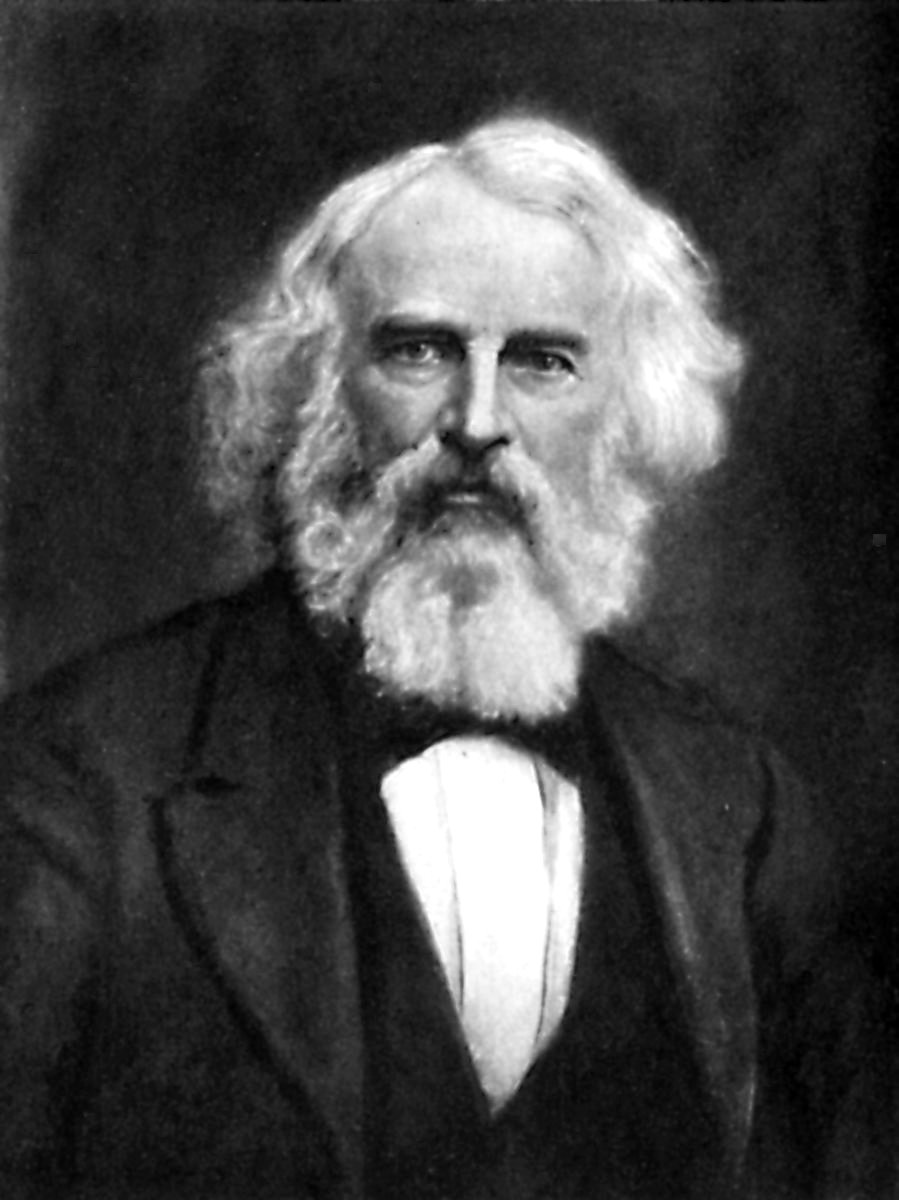
I first remember the bearded face of Henry Wadsworth Longfellow from the Authors card game that my sister and I had when we were in elementary school.  We would sit at the kitchen table and competitively seek to complete our sets of cards bearing the names and portraits of writers like Robert Louis Stevenson, James Fenimore Cooper, Louisa May Alcott, and Alfred Lord Tennyson.

It was only this week that I learned of the tragedy behind Longfellow’s trademark beard.  In July of 1861, his wife Frances was severely burned when her dress mysteriously caught fire in their home.  In rushing to her aid to extinguish the flames, Henry himself was quite badly burned.  Frances, the mother of Longfellow’s six children, died the next day.  Longfellow was devastated by Frances’ death, just as he had been when his first wife Mary died after a miscarriage in 1835.  Longfellow’s facial injuries from the fire caused him to stop shaving. 

On Christmas Day, 1863, Longfellow was still grieving the death of Frances.  He was also deeply troubled by the news that his oldest child, Charles, had been seriously wounded in Virginia while serving in the Army of the Potomac in the Civil War.  But, despite his downcast heart and mind, his spirits were lifted by the sound of church bells ringing near his home.  That day, he penned “Christmas Bells” which was later set to music in the Christmas carol, “I Heard the Bells on Christmas Day.”

I heard the bells on Christmas Day
Their old familiar carols play,
And wild and sweet
The words repeat
Of peace on earth, good-will to men!

And thought how, as the day had come,
The belfries of all Christendom
Had rolled along
The unbroken song
Of peace on earth, good-will to men!

Till, ringing, singing on its way,
The world revolved from night to day,
A voice, a chime
A chant sublime
Of peace on earth, good-will to men!

Then from each black accursed mouth
The cannon thundered in the South,
And with the sound
The carols drowned
Of peace on earth, good-will to men!

It was as if an earthquake rent
The hearth-stones of a continent,
And made forlorn
The households born
Of peace on earth, good-will to men!

And in despair I bowed my head;
“There is no peace on earth,” I said;
“For hate is strong,
And mocks the song
Of peace on earth, good-will to men!”

Then pealed the bells more loud and deep:
“God is not dead; nor doth he sleep!
The Wrong shall fail,
The Right prevail,
With peace on earth, good-will to men!”

While hate is still strong and still mocks the song of “Peace on Earth,” Longfellow was absolutely correct to proclaim that God is neither dead nor sleeping.  Right will prevail.  Wrong will fail.

Despite difficult and trying circumstances that you may be experiencing today, I pray that each of you will rejoice in the inner calm, tranquility, and hope that can only come from the Prince of Peace.  The unbroken song continues.  Merry Christmas!

“Promises made, and promises broken; measures of our demise…”  So begins the song “Promises Made” on Dan Fogelberg’s 1977 album Nether Lands

Everyone can relate to broken promises.  When commitments have been made and expectations have been created, there is a great sense of disappointment when one fails to make good on their word.  Depending on the magnitude of the matter, failure to deliver on a promise can leave people disillusioned and hesitant to trust again, lest there be additional letdowns and emotional pain in the future.  Sometimes the promise is as mundane as, “I’ll call you later.”  Sometimes it is as weighty as, “For as long as we both shall live.”  Sometimes there are good and sincere intentions that just don’t come to fruition.  Sometimes there is outright deception from the beginning.  Sometimes our disappointment is in others.  Sometimes it is in ourselves.  Such is the nature of the promises of man.

It is such an awesome blessing to trust and serve a God Who Delivers, a Father whose promises never fail.  Unlike Satan, whose very nature is that of a liar and the father of lies (John 8:44), it is impossible for Yahweh to speak what is untrue (Hebrews 6:18; Titus 1:2).  He is the God of Truth, whose Son is the Truth, and who has sent the Spirit of Truth.  All of God’s promises are “yes” in Jesus Christ, our Amen (II Corinthians 1:20)!

God fulfilled every Messianic prophecy by sending the Christ to be our Savior.  In the same way, He will fully deliver on His promise to rescue us from death and grant us an eternal home in glory.  God has spoken.  He has promised.  It can’t not happen.  Forgive the double negative, but you get the point.  It HAS to be!

“Let us hold fast the confession of our hope without wavering, for He who promised is faithful” (Hebrews 10:23).

Enter your email address to subscribe to this blog and receive notifications of new posts by email.

Join 175 other subscribers

Archives

February 2026
S M T W T F S
1234567
891011121314
15161718192021
22232425262728