Tomorrow is Christmas!  Most of us have likely completed the bulk of our shopping by now.  Once again, you have probably experienced the fact that selecting a gift for some individuals is just a lot more difficult than it is for most of the other people in our lives.  Whether due to their eccentricities, strange taste, or general surliness, buying a present for such a person requires significantly more thought and creativity.

Occasionally we see advertisements touting, “gifts for the man who has everything.”  What would you give as a Christmas present to someone like Bill Gates (net worth of $66 billion) or Warren Buffett (net worth of $46 billion)?  It would be nearly impossible to give them anything of a physical nature that would cause either of them to gush and say, “Wow!  I’ve really been needing one of those.  Where on earth did you find that?”  But, even as wealthy as Gates and Buffett are, they don’t actually own everything, not even close to everything.

Yet, there is Someone who does!  What could you give to Someone who truly has everything?

“The earth is the Lord’s, and all it contains, the world, and those who dwell in it.” (Psalm 24:1)

“The heavens are Yours, the earth also is Yours; the world and all it contains, You have founded them.” (Psalm 89:11)

And then there’s the ultimate “keeping things in perspective” passage:

“For every beast of the forest is Mine, the cattle on a thousand hills.  I know every bird of the mountains, and everything that moves in the field is Mine.  If I were hungry I would not tell you, for the world is Mine and all it contains.” (Psalm 50:10-12)

So, what do you offer to a God who has everything?  We can’t give Him anything that He needs; an infinite Deity needs nothing.  If only there were some way to know what He wants.  Ah!  That’s where Scripture helps us out tremendously.

To speak of what God wants is another way of expressing what God wills, what He longs for, desires, and seeks.

All God wants for Christmas is you!  And He wants all of you, heart, mind, soul, and strength.  He wants your salvation.

Why didn’t the world end last Friday on December 21?  Why didn’t Jesus return last year or 1,500 years ago?  Because God hasn’t gotten everything that He wants yet!

“The Lord is not slow about His promise, as some count slowness, but is patient toward you, not wishing for any to perish but for all to come to repentance.” (II Peter 3:9)

“This is good and acceptable in the sight of God our Savior, who desires all men to be saved and to come to the knowledge of the truth.” (I Timothy 2:3-4)

“Yet God does not take away life, but plans ways so that the banished one may not be cast out from Him.” (II Samuel 14:14)

He wants us, not anything that we can give Him, but us, as living and holy sacrifices (Romans 12:1-2).

How badly does God want us?  Enough to allow His Son to die for us!

“She will give birth to a son, and you are to name Him Jesus (Yeshua, “God saves”), because he is the one who will save his people from their sins.” (Matthew 1:21)

“Today in the town of David a Savior has been born to you, he is Christ the Lord.” (Luke 2:11)

What God wants has been made a reality in His Son Jesus Christ.  That’s why we believe in Him.  That’s why we confess Him. That’s why we turn from sin toward Him. That’s why we are baptized in His name, united with Him in baptism, and washed from our sins by the power of His blood.  That’s why we follow in His steps.

“Therefore the Lord longs to be gracious to you, and therefore He waits on high to have compassion on you.  For the Lord is a God of justice; how blessed are those who long for Him.” (Isaiah 30:18)

There is nothing that God wants more than you.  There is nothing that you need more than Him.

Merry Christmas!

A question for all of the dads out there:  If you had to choose someone else to raise your son, who would it be?  If, for whatever reason, you knew that circumstances were going to prevent you from being able to nurture and protect the child who bore your likeness and shared your DNA, who would you select?  Your brother, perhaps?   A trusted brother in Christ?  A close friend?  It would have to be someone who you knew, beyond a shadow of a doubt, would raise him exactly the same way you would.  Your selection of a surrogate would be made with the utmost care and intention; there would be only one chance to get this right.

God chose Joseph of Nazareth to raise His Son.

We frequently focus, and for good reason, on God’s selection of Mary to bring the Messiah into the world, a virgin who would conceive within her womb by the overshadowing of the Holy Spirit and give birth to the Word in human flesh, Immanuel, God with us, a Savior, who is Christ the Lord.

But, this was a package deal.  Mary was engaged and would soon be married to Joseph, son of Jacob, a carpenter of the tribe of Judah whose ancestral home was Bethlehem, the city of his forefather David.  Joseph would serve as the protector, provider, and spiritual leader of this young family.

Joseph’s faith and character are succinctly described by the phrase, “a righteous man” (Matt. 1:19), not indicating holy perfection, but a sincere and serious desire to serve and obey the God of Abraham, Isaac, and Jacob.  He is not mentioned at all in the Gospel of Mark, and only in passing in the Gospel of John as people referred to Jesus as “the son of Joseph.”  It is only Matthew and Luke who, through the Holy Spirit, give us insight into Joseph’s heart and life.

Joseph is a man of few words as far as Scripture is concerned; none, to be precise.  It is rather remarkable that not a single syllable is recorded from the lips of Joseph that he spoke to Mary, the angel, the shepherds, the wise men, Simeon, Anna, the scribes in the Temple, or to Jesus.  Joseph’s actions speak louder than words!

When Joseph initially believed that Mary’s pregnancy was the result of unfaithfulness and sin, compounded by lies about an angel and the involvement of the Holy Spirit, he still loved her far too much to subject her to public humiliation.  Despite the emotional pain and betrayal that he felt, Joseph intended to put Mary away secretly, below the radar of small town scorn and gossiping tongues.  He couldn’t bear the thought of others looking at her as he did at the time.  It took an angelic visitation in a dream to convince Joseph of the truth of Mary’s story.

Four times, Joseph received messages from God via angels in dreams (Matt. 1:20; 2:13; 2:19; 2:22).  That’s twice as many dreams as were experienced by another “Joseph, son of Jacob” that we typically remember as “the dreamer.”  After each dream, Joseph responds immediately with compliance and obedience; no hesitation, no procrastination, no negotiation.  Consider it done!

Joseph led his family in the way of the Lord.   He made sure that Jesus was circumcised on the eighth day and later presented at the Temple with the sacrifice for Mary’s purification that was required by the Law (Luke 2:21-24).   He would have taken Deut. 6:7 and other texts seriously in providing spiritual instruction for his children, not only Jesus, but also James, Joses, Simon, Judas, and his daughters (Matt. 13:55-56).  The Passover pilgrimage to Jerusalem was an annual  family tradition (Luke 2:41).  Based on Jesus’ performance at age 12 in the Q&A session in the Temple (Luke 2:46-47), I would say that Joseph must have been quite a good teacher!

It is assumed that Joseph died at some point between Jesus’ 12th year and the beginning of His public ministry at age 30.  Unlike Mary and Jesus’ earthly brothers, Joseph is never mentioned as being present in the ministry narratives.  The fact that Jesus commits Mary’s care to the apostle John shortly before His death on the cross serves as near certain confirmation that Joseph was no longer alive.

As hearts and minds turn to the miracle of the Savior’s birth this Christmas, I wanted to make sure that Joseph’s vital role in God’s plan didn’t just fade into obscurity in the “family photo” that was taken around the manger.  The Father handpicked Joseph to raise His Son, quite a treasure to be entrusted into one’s care and protection.  That fact alone causes Joseph’s stock to rise immensely among the Cloud of Witnesses that has gone before us.

Sandy Hook 1

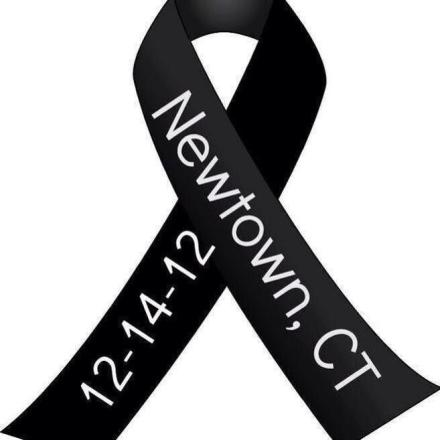
Hearts remain heavy with shock and grief over the tragic loss of life at Sandy Hook Elementary School in Newtown, Connecticut, last Friday.  This kind of heartrending sorrow seems totally irreconcilable with the joy that normally accompanies this time of year.  As I was pondering how this senseless violence and the wanton taking of innocent lives seems to mock the very notion of the birth of the Prince of Peace, I remembered the conflicted sentiments contained within the verses of a Christmas carol that I blogged about on Christmas Eve three years ago.  I am reposting it below as, yet again, it beautifully expresses to me how hearts burdened with personal pain and loss can find redemption and hope in Jesus Christ.

__________________________________________________________________________________

I first remember the bearded face of Henry Wadsworth Longfellow from the Authors card game that my sister and I had when we were in elementary school.  We would sit at the kitchen table and competitively seek to complete our sets of cards bearing the names and portraits of writers like Robert Louis Stevenson, James Fenimore Cooper, Louisa May Alcott, and Alfred Lord Tennyson.

It was only recently that I learned of the tragedy behind Longfellow’s trademark beard.  In July of 1861, his wife Frances was severely burned when her dress mysteriously caught fire in their home.  In rushing to her aid to extinguish the flames, Henry himself was quite badly burned.  Frances, the mother of Longfellow’s six children, died the next day.  Longfellow was devastated by Frances’ death, just as he had been when his first wife Mary died after a miscarriage in 1835.  Longfellow’s facial injuries from the fire caused him to stop shaving.

On Christmas Day, 1863, Longfellow was still grieving the death of Frances.  He was also deeply troubled by the news that his oldest child, Charles, had been seriously wounded in Virginia while serving in the Army of the Potomac in the Civil War.  But, despite his downcast heart and mind, his spirits were lifted by the sound of church bells ringing near his home.  That day, he penned “Christmas Bells” which was later set to music in the Christmas carol, “I Heard the Bells on Christmas Day.”

I heard the bells on Christmas Day
Their old familiar carols play,
And wild and sweet
The words repeat
Of peace on earth, good-will to men!

And thought how, as the day had come,
The belfries of all Christendom
Had rolled along
The unbroken song
Of peace on earth, good-will to men!

Till, ringing, singing on its way,
The world revolved from night to day,
A voice, a chime
A chant sublime
Of peace on earth, good-will to men!

Then from each black accursed mouth
The cannon thundered in the South,
And with the sound
The carols drowned
Of peace on earth, good-will to men!

It was as if an earthquake rent
The hearth-stones of a continent,
And made forlorn
The households born
Of peace on earth, good-will to men!

And in despair I bowed my head;
“There is no peace on earth,” I said;
“For hate is strong,
And mocks the song
Of peace on earth, good-will to men!”

Then pealed the bells more loud and deep:
“God is not dead; nor doth he sleep!
The Wrong shall fail,
The Right prevail,
With peace on earth, good-will to men!”

While hate is still strong and still mocks the song of “Peace on Earth,” Longfellow was absolutely correct to proclaim that God is neither dead nor sleeping.  Right will prevail.  Wrong will fail.

Despite difficult and trying circumstances that you may be experiencing today, I pray that each of you will rejoice in the inner calm, tranquility, and hope that can only come from the Prince of Peace.  The unbroken song continues.  Merry Christmas!

I am at a loss for any words of wisdom.

I have no keen insights that can make any sense out of this senseless tragedy.

I lack the spirit to wade into the contentious debates that inevitably follow such devastating events.

I will continue to trust in the Lord and not lean on my own understanding, for it seems so small and inadequate in the face of the slaughter of the innocents.

Lord, help us!

What do Walmart, Chick-fil-A, and a U.S. Post Office share in common?  I’ll answer that in just a moment.  But, first, another question.

How do you get better at something?  The answer is: practice!

If you want to raise your free throw percentage in basketball, you stay in the gym and put up shot after shot from the foul line; stay loose, regulate your breathing, feet squared to the basket, flex your knees, fluid stroke, follow through, and repeat.  If you want to have more confidence in your golf swing and lower your score on the course, you go to the driving range and hit a large bucket of balls, and perhaps another.  Proficiency in playing a musical instrument works the same way.  Just wishing you were better or watching other people play isn’t enough.  You’ve got to get in on the action yourself and learn by doing; on-the-job training is essential if you want to improve.  Practice!

There is one sense of the word “practice” which simply indicates something that is carried out or performed habitually, as in someone who “practices kindness” or “practices hospitality”; this meaning also extends to activities that are done professionally, like “practicing medicine” or “practicing law.”  But, the secondary sense of the verb means “to perform or work at something repeatedly so as to become proficient; to train by repeated exercises.”

Several months ago, in a lesson on the subject of patience, I sought to challenge myself and others to consider ways in which we could actively grow in this particular grace and fruit of the Spirit.  I wasn’t discussing the kind of patience (hupomone) that is more accurately translated “endurance” or “perseverance” in tribulation, but the patience (makrothumia) that describes how we “wait” for the Lord’s coming and how the farmer “waits” for the rain (James 5:8).

I found myself using the phrase “practice patience” to describe how we should respond in situations in which we have no recourse but to wait, waiting on “God’s own time” or a change in circumstances that are beyond our control.  I was using  “practice” in the first sense noted two paragraphs above.  But, what if we shifted the emphasis to the second sense of the term and actually practiced patience.  I ad-libbed at this point in the message (always dangerous for me) and threw out the idea that I just might need to go somewhere for no other purpose than waiting in line so that I could have more “practice” at being patient.

I finally got around to doing some follow-up on that concept the other day.  I decided to use my lunch hour to practice patience.  My first stop was Walmart.  I really didn’t need to buy anything, but I grabbed a couple of rather inexpensive items that I could use eventually, then selected the longest check-out line in which to wait.  May I remind you that it is two weeks before Christmas; finding long lines at Walmart is not too much of a challenge at this time of year.  Next stop, the Chick-fil-A drive-thru lane around 12:30.  More excellent practice!  I had planned to skip my noon meal that day, but decided to reward my wait with a yogurt parfait.  The last exercise station in my “patience workout” was at the post office.  I did mention that it’s a couple of weeks before Christmas, didn’t I?

What did I accomplish while I was waiting?  Several things, actually.  I realized how frequently I’m in a hurry.  I pondered what it is about waiting that drives me nuts, along with a lot of other normally reasonable people.  So, I missed the traffic light; so, my line at the grocery store always seems to move the slowest; so, it’s 30 minutes past my appointment time and I’m still in the aptly named waiting room at the doctor’s office.  Should that really cause my blood pressure to rise, my tone to become snarky, and my countenance to fall?

Having blogged recently about the promise of God’s presence in us and around us in this world, I consciously thought about the fact that God was with me at Walmart, at Chick-fil-A, and standing in line with me at the post office.  I considered that everyone in line ahead of me and those who were working behind the counter were all created in His image, each and every one of them loved by Him unconditionally.  How many of these people had Christ living in their hearts?  How many were seeking Him?  How many should have been seeking Him, but weren’t?  When I finally made it up to the counter, I asked the pleasant postal worker for a book of Christmas stamps.  We ended up having a brief, but incredibly enjoyable, conversation about my choice of stamps.  She enthusiastically concurred with my selection.  I left with a smile on my face.

A waste of time?  Not for me.  Within just a few hours, I had a dramatic “reality check” that reminded me how much more practice I need in being patient.

“To perform or work at something repeatedly so as to become proficient; to train by repeated exercises.”

Practice kindness.  Practice hospitality.  Practice patience.

I’m sending you out as lambs in the midst of wolves. (Luke 10:3)

Some pep talk!  This could easily be voted the “Least Likely Metaphor to Instill Enthusiasm and Confidence.”  What was Jesus thinking?  It sounds like a recipe for disaster.  Few things in this world are as helpless as lambs; few animals are as vicious as wolves.  Who would sign up for a such a suicide mission?

The context of these words from Jesus is found in the commissioning of seventy-two disciples, sent out in pairs as “advance teams” to the cities and villages where He would later visit personally.  I reference the number “seventy-two” here, as it appears in Luke 10:1 in the NIV, NLT, and ESV, even though “seventy” is found in my NASB (1995 Updated Edition), which is God’s favorite English translation.  That’s a joke, for those of you who don’t know me.  I could go into several reasons why different groups of scholars favor one number over the other, respectively, based on Greek manuscript evidence and the symbolic significance of each number.  I will refrain from doing so as an early Christmas present to all of you.

These seventy-two disciples were anointed by Jesus with power to heal the sick, given authority over demons, and charged to proclaim the nearness of the kingdom of God.  They were sent out with meager physical provisions, instructed to demonstrate proper etiquette in the homes into which they were welcomed, and prepared for inevitable rejection by many.

This is where Jesus’ motivational speech comes in.  “Okay, lambs!  Get out there among those wolves.”  This could get ugly, fast!

And yet, as happens so often in Scripture, something remarkable took place, something miraculous.  The lambs dominated!  They totally crushed the opposition.  The lambs ran the wolves off the field.  Lambs 72 – Wolves 0!!!

The seventy-two returned with joy and said, “Lord, even the demons submit to us in your name.” (Luke 10:17)

Ah!  “In your name!”  That was the secret weapon.  It wasn’t any inherent strength or power in the lambs.  Without Jesus, they would have been served as hors d’oeuvres at the wolf pack party.  It was the power and authority of the Good Shepherd who sent them out that assured their success!

Once again, God was using the weak and the improbable to accomplish His purposes and demonstrate His power.  That’s what Gideon’s 300 were all about, and David’s sling and stone, and the widow’s smidgen of flour and oil, and the five loaves and two fish.

And He said to me, “My grace is sufficient for you, for power is perfected in weakness.”  Most gladly, therefore, I will rather boast about my weaknesses, so that the power of Christ may dwell in me.  Therefore, I am well content with weaknesses, with insults, with distresses, with persecution, with difficulties for Christ’s sake; for when I am weak, then I am strong. (II Corinthians 12:9-10)

Jesus basically told the seventy-two disciples that Satan was in a free fall; the Evil One was dropping like a rock and picking up speed with every demon that was cast out.  Then, He put things in perspective as only He could.

However, do not rejoice that the spirits submit to you, but rejoice that your names are written in heaven. (Luke 10:20)

Indeed!  He’s not only the Good Shepherd, He’s the Lamb of God, to whom belongs the book of life.

Thank you, Lord, for recording our names there!

The power of a promise.

“Surely I will be with you,” (Judges 6:16).  It was the power of that promise that emboldened Gideon to overcome fear, doubt, and overwhelming odds and lead the Israelites to victory over 135,000 Midianites.  Gideon didn’t consider himself to be a “valiant warrior,” the phrase by which the angel of the Lord addressed him.  We tend to see ourselves as we are at the moment and as we have been in the past.  God sees what we can become through Him.  The Lord patiently provided several convincing signs to Gideon so that faith could gain the upper hand on doubt.  But, ultimately, it was Gideon’s confidence in the divine Presence that empowered him to lead his minuscule band of 300 men (0.93% of his original troop strength) into battle, armed with a most unconventional array of weaponry.

“Certainly I will be with you,” God told Moses (Exodus 3:12), as the future deliverer of the enslaved Hebrews offered self-effacing excuses to the Voice that spoke to him from the burning bush.  God promised Moses that he would not have to face Pharaoh alone.  Similarly, as Joshua later took up the mantle of leadership from Moses, the Lord challenged him to gird himself with courage and strength.  But, human valor and military might alone would be insufficient to secure the land of Canaan.  “Just as I have been with Moses, I will be with you; I will not fail you or forsake you.  Do not tremble or be dismayed, for the Lord your God is with you wherever you go,” (Joshua 1:5, 9).

Ahaz, king of Judah, trembled as the armies of Aram and Israel marched toward Jerusalem.  The Lord dispatched the prophet Isaiah to assure Ahaz that the enemy’s plans for laying siege to the holy city would fail.  As a sign of God’s presence and protection, a child would be born and would be given the name Immanuel by his mother (Isaiah 7:14).  It was unnecessary for the meaning of this Hebrew name to be explained.  Isaiah’s audience, like Ahaz, knew well that Immanuel signified God’s presence with His people.

700 years after the days of Ahaz, God brought about an incomprehensibly greater fulfillment of Isaiah’s prophecy.  God wasn’t going to merely provide a sign and symbol of His presence once again.  Instead, God Himself would be enveloped in human flesh through birth by a virgin who had conceived in her womb by the power and overshadowing of the Holy Spirit (Matthew 1:18-23).  Incarnation!  Immanuel!  God with us!

As I have mentioned before, I have stopped petitioning God in prayer to “be with” me and others, as if He were distant and aloof and had to be cajoled into showing up and sticking around.  Rather, I joyfully thank Him and praise Him for His unfailing Presence that He has promised and provided through His Son and His Spirit.  I then identify more specifically the blessings and response that my heart desires for His presence and power to provide.

“I am with you always, even to the end of the age,” (Matthew 28:20).

“I will ask the Father, and He will give you another Helper, that He may be with you forever; that is, the Spirit of truth…,” (John 14:16-17a).

“I will never desert you, nor will I ever forsake you,” (Hebrews 13:5; cf. Joshua 1:5).

“Where can I go from Your Spirit?  Or where can I flee from Your presence?” (Psalm 139:7-12).

As we enter this annual season of remembering and celebrating the advent of God in the flesh, let us rejoice in the blessings and promises that are ours through the Incarnation and Jesus’ subsequent atoning sacrifice and glorious resurrection.

Never alone.  Never forsaken.  Never abandoned.  Never hopeless.

In Jesus Christ, we cry, “Immanuel!”

Can you imagine the scene and the ensuing conversation when the apostle Paul ran into Stephen for the first time in Paradise, not having seen him since he participated in Stephen’s martyrdom by stoning in Jerusalem?

Before we listen in on their conversation, I want to share a little bit about Stephen, as I did last night at the Broken Arrow church in our Cloud of Witnesses study.

There is so much more to Stephen than merely being the answer to a couple of Bible Trivia questions.  The Holy Spirit and Luke only wrote a brief scene for him in the unfolding drama of the early church as recorded in the book of Acts, but what a scene it was!  His name does not appear before Acts 6, and he is only mentioned in passing after Acts 7.  Yet, Stephen’s life and violent death prove to be a critical turning point in the spread of the Christian faith from Jerusalem to the remotest parts of the earth.  There a few people in Scripture about whom so much is revealed regarding their character and heart.  There is a highly disproportionate amount of “character development” provided for Stephen given the relative brevity of the scene in which he appears.

Stephen met the “faith and character qualifications” of being “of good reputation, full of the Spirit and of wisdom” (Acts 6:3) in the search for leaders to oversee the equitable distribution of daily food to the many widows in the Jerusalem church.  He was well-known among the people and greatly respected.  He is further described as “full of faith and of the Holy Spirit” (6:5), “full of grace and power” (6:8), and was a skilled apologist and evangelist who spoke with convicting words of “wisdom and the Spirit” (6:10).  He was also a miracle worker, performing mighty signs and wonders by the power of the Spirit (6:8).

Additionally, due to the nature of the ministry and challenge that he and the six other “proto-deacons” were tasked with overseeing, Stephen undoubtedly possessed a wide range of other valuable “people skills”:  peacemaking and bridge-building abilities, administrative skills, and the humility necessary to be a team player, working alongside Philip and the others in compassionately caring for the needs of these widows.

When opposition to Stephen’s ministry reached a fever pitch and he was hauled before the Sanhedrin for interrogation, Luke records that the members of the Council “saw his face like the face of an angel” (Acts 6:15).  I’m not exactly sure what that means, but it probably wasn’t a comparison to the impish smirk of a chubby cherub or the hard-set face of a destroying angel.  It likely refers to a countenance of calm, a look of peace, serenity, and confidence that shone like a light in this context of hostility and aggression.

How did Luke know what Stephen’s face looked like in the perception of the members of the Council?  While it is certainly a detail that could have been provided by the Holy Spirit, it is highly probable that this insight was shared with Luke by the apostle Paul, who was undoubtedly present during Stephen’s trial and still known at the time by his Hebrew name, Saul.  Among those in the Synagogue of the Freedmen who brought charges against Stephen (6:9-14) were men from Cilicia, the region of Saul’s hometown of Tarsus. At the end of the scene, the cloaks of those who stoned Stephen outside of Jerusalem are placed at Saul’s feet.  Paul may have related the story to Luke numerous times in their later travels together.

Years after the fact, Paul recalled, “And when the blood of Your witness Stephen was being shed, I also was standing by approving, and watching out for the coats of those who were slaying him,” (Acts 22:20).

Paul himself would ultimately be martyred for his faith in Christ, the same faith that led to Stephen’s death.  That’s where we pick up the conversation in Paradise.

Paul:  “Stephen?  It’s me, Saul!  Actually, you can call me Paul; most of my Christian friends do.  Hey, I am so sorry about what happened in Jerusalem.  I just stood there and let it happen.  But, at the time, I sincerely believed that you should die for your faith in Jesus.  Rather ironic, isn’t it?  Here I am, put to death for the very same reason.”

Stephen:  “Paul, seriously, don’t worry about it!  To be perfectly honest, I hadn’t planned on dying that day.  But, I’ve got to tell you, this place is incredible, totally unbelievable.  So, I really can’t complain about getting here a little earlier than I expected.”

Paul: “I know exactly what you mean.  I got a brief glimpse of this place several years ago in a vision, or maybe it wasn’t a vision, I could never tell for sure.  Anyway, it totally changed my perspective on things.  I even received a thorn in the flesh over it, just to keep me humble.  After that, I wrote to the brothers in Rome that our earthly afflictions can’t even be compared to the glory of this place.  I assured the church family in Philippi that to live was Christ, to die was gain, and to depart and be with the Lord was far better.  If they only knew!”

“But, seriously, Stephen, despite the beauty and glory and comfort of being here in the presence of Jesus, I just really need to know that you forgive me for my part in stoning you to death.  I know that you experienced incredible suffering and agony, and I’m sorry for that.  Please, forgive me.”

Stephen:  “Paul, I already did, brother!  Don’t you remember?  I let that go before I died.  And as far as God is concerned, that was part of all of the sin and baggage in your life that was washed away by the blood of Christ when Ananias baptized you.  I hope that you didn’t lose any sleep over this.”

While I’m not at all keen to suffer the kind of violent death that Stephen experienced, I can truly say that I want to die like Stephen.

Jesus had not only taught Stephen how to live, He also taught him how to die.

“Lord Jesus, receive my spirit,” (Acts 7:59).  “Lord, do not hold this sin against them,” (Acts 7:60).  Both of Stephen’s statements echo words spoken by Jesus during His suffering on the cross (Luke 23:34, 46).

I want to be able to face death with that kind of faith and confidence.  I want to have that same spirit of grace to release and forgive anyone who has wronged me for any reason.  I don’t need that kind of baggage on my final journey.

I have posted before about my great admiration for the music of Mark Knopfler, the former Dire Straits front man who has continued to release solo albums, compose movie soundtracks, and collaborate with an incredibly diverse group of artists across a wide range of musical genres.  He is a master of the guitar.  His unique variation of the “clawhammer” fingerpicking style and his signature tone are immediately recognizable.  As a lyricist, he is a gifted musical storyteller.  Kim and I had the opportunity to see Knopfler perform in Nashville at the Ryman Auditorium in 2005 and at the Fox Theatre in St. Louis in 2010 on an anniversary trip.

I was thrilled to learn earlier in the year that Knopfler would be touring North America with Bob Dylan this fall, just as they had done in Europe late last year.  The musical relationship between the two dates back over 30 years, with Knopfler playing lead guitar on Dylan’s 1979 album, Slow Train Coming, and producing another Dylan album in the early ’80s.

When the tour dates were announced on Knopfler’s website a few months ago, my eyes lit up when I saw Tulsa on the itinerary.  Then, my heart sank like a rock when I saw that the T-Town concert would be on November 2, the night that I was to attend a wedding rehearsal dinner in Plano, Texas.  The wedding date had been booked since March, and I felt extremely honored to be asked to perform the ceremony for Taylor Grow, whom I have known since she was 10 years old.  There was no way that I was not going to be there for Taylor and Eric on that Friday night.

What are the odds that, on the only night in my life that Knopfler was going to perform in the city where I live, I would be out of town?

HOWEVER… my spirits skyrocketed when I noticed that on Thursday night, November 1, Dylan and Knopfler were playing at the Verizon Theater in Grand Prairie, just a stone’s throw (in Texas distance, anyway) from where we were going to be on Friday.  Incredible!  All we had to do was extend the trip by one day on the front end for a concert on Thursday night, rehearsal dinner on Friday night, and wedding on Saturday night.

My interest in the concert was purely to hear Mark Knopfler play again, but I was rather intrigued by the prospect of seeing Bob Dylan.  Along the same lines of my recent post about A&M Records being founded in the year of my birth, Dylan’s first studio album was released in 1962.  With this year’s release of Tempest, Dylan has issued 35 studio albums over the last 50 years.  When you add in live albums, compilations, etc., his catalog includes a mind-boggling 71 titles.  Dylan fan or not, you’ve got to respect that kind of longevity and his unquestioned influence on the American music scene over the last half century.  I never followed him closely, but I particularly remember his Christian-influenced phase in the late ’70s and his collaboration with George Harrison, Jeff Lynne, Tom Petty, and Roy Orbison as a member of the Traveling Wilburys in the late ’80s.  Among my favorite Dylan lyrics is a line from “Subterranean Homesick Blues”: “You don’t need a weather man to know which way the wind blows.”

One of the biggest knocks on Bob Dylan over the last several years has been that his performances are highly unpredictable.  He tends to remain ambivalently detached and aloof from the audience and almost never plays a song in an arrangement similar to its studio version.  And his voice?  Music critics have described Dylan’s voice in recent years as a “zombie bullfrog holler,” “a hoarse Fred Sanford after an all-night fight with Lamont,” and “sounds as if he’s been gargling with gravel for the last several decades.”  After reading reviews of earlier tour stops in Canada and on the West Coast, I wasn’t expecting a lot.  But, I was pleasantly surprised.  Kim particularly enjoyed his set.  Despite his general unintelligibility and my unfamiliarity with all but four or five of the songs that he played, it was nice to see this musical living legend.  At 71 years of age, he’s still at it.  I’m 50 and haven’t even managed to crank out my first book yet, so who am I to criticize anyone?

Of course, the night belonged to Knopfler, despite the fact that he and his band of world-class musicians were technically the opening act.  Their 70-minute set was a masterful performance.  I could have listened all night.  While I paid more for our 14th row, center section seats than I typically would, it was well worth it and served as my 50th birthday present to myself and Kim.

As I mentioned in my last post, it has always “taken a village” with our son Coleman.  Kim and I couldn’t have enjoyed the concert if it hadn’t been for Mark and Laura Bryson, our dear friends and former co-workers at the McDermott Road church.  They let Coleman hang out with them at home, just as they did on Friday night while we attended the rehearsal dinner.  They are like family to us.  On Saturday night, other friends who are extremely near and dear to our hearts, Russell and Vicki Selman, kept him while we were at the wedding.  Coleman just couldn’t stop smiling and jumping when he saw Ms. Vicki.

After sharing in the joy of Taylor and Eric’s wedding, we picked up Coleman at the Selman’s house, then made the four-hour drive back to Tulsa.  We were home by 1:00 a.m., which actually amounted to midnight because of the shift back to Standard Time that night.  I was grateful for the bonus of another hour’s sleep.

Music, marriage, the fellowship of friends, and a getaway with my family.  November got off to a great start!

On September 24 of this year, Kim and I had the surreal experience of standing before a judge, seeking to make as clear and compelling a case as possible as to why we should be granted legal guardianship of our son Coleman.  There are very few subjects about which I feel that I possess an expert level of knowledge, probably only one, and Coleman is it.  Still, it was rather unnerving and intimidating for us to be providing answers to questions about his condition and his daily care to a person who had the legal authority to either grant or deny guardianship.  We felt the intense gravity of the situation every time we heard Coleman referred to as a “ward” during the proceeding.  I now have a little insight into the emotional implications of being “at the mercy of the court.”

We have known for years that we would need to secure legal guardianship of Coleman after he turned 18.  From a parental standpoint, this seemed totally counterintuitive.  We have cared for him every single day of his life, through all of the ups and downs, joys and sorrows, victories and setbacks that accompany developmental disabilities and chronic illness.  He was indisputably “ours.”  However, from a legal standpoint, when he reached adulthood it would be necessary to demonstrate that he was incapable of caring for himself and that we were the ones best suited to continue providing for his health and well-being.

Despite our realization that this would be required at some point, it remained a “back burner” concern for us, even after he celebrated his 18th birthday early last year.  However, the issue got moved to the front burner very quickly in August when Coleman’s sedation dentistry procedure was cancelled by the surgical center on the day before it was scheduled to be performed because we did not have legal guardianship.  Suddenly, what had only existed as a vague concept for us now took on serious, concrete implications.  While Kim has lived in constant “advocacy mode” for Coleman for almost 20 years, she once again shifted that labor of love into warp drive with a flurry of phone calls.  Within a few days, we appeared before a judge on August 27 to gain emergency, temporary guardianship and had the hearing for permanent guardianship set for September 24.

It has always “taken a village” with Coleman, and God has consistently and faithfully provided the right people at the right time, in moments of both crisis and calm.  We are extremely grateful to Jerry Lundy (friend, brother in Christ, attorney), for helping us traverse the very unfamiliar legal landscape of the guardianship process.  Also, we deeply appreciate the counsel and practical insights shared with us by our friends Bill and Lawana Duwe, who for many years have provided 24/7 care for their son Ray who was disabled in a car accident.

At the end of the hearing, which was dominated by extremely matter-of-fact (somewhat stern) questions and statements by the judge, the tone became significantly more “human” and compassionate as she expressed her understanding and appreciation of the challenging demands of raising a disabled child and her confidence that Coleman would continue to be ably provided for under our care and guardianship.  While the petition was entirely uncontested and we couldn’t foresee any reason why the court would find otherwise, it was still a huge relief to see the judge sign the guardianship documents and witness them being embossed with the official seal of the court.

While Kim and I were somewhat perplexed and stressed by having to go through the guardianship process for Coleman, we understand that these legal statutes exist as part of the “ordinance of God” (Romans 13:1-7), serving to protect the interests of those in our society who are the most helpless, the most defenseless, and the most susceptible to being used and abused by others.  It is an extension of God’s own concern, care, and protection.

The language and status of guardianship caused me to reflect upon our relationship with our God and Savior.

I Peter 2:25 reads, “For you were continually straying like sheep, but now you have returned to the Shepherd and Guardian of your souls,” (New American Standard Bible).  The New Living Translation joins the NASB in rendering this second descriptive term of Jesus Christ as being our “Guardian.”  Other standard English translations go with “Bishop” or “Overseer” (it’s episkopos, for you Greek geeks).  The Aramaic Bible in Plain English translates, “the Caregiver of your souls.”

I love this figure of Jesus being our spiritual Guardian and Caregiver.  The language in the guardianship document stipulates that Kim and I are to act on Coleman’s behalf to “promote and protect” his well-being, doing things for him that he is entirely incapable of doing for himself.  That is precisely what has been done for us by “the Great Shepherd of the sheep through the blood of the eternal covenant,” (Hebrews 13:20).  Though we rightfully belonged to God as children made in the Creator’s own image, the guardianship of our souls was thrown into question because of sin and was fiercely contested by an Adversary and an Accuser.  It took the blood of Jesus Christ to satisfy the Court of the Most High.  We have now been sealed with the Holy Spirit, who serves as an authoritative mark of identification, authenticating the fact that we have been returned to the care and protection of our rightful Father.

It’s good to have a Guardian!

Enter your email address to subscribe to this blog and receive notifications of new posts by email.

Join 175 other subscribers

Archives

February 2026
S M T W T F S
1234567
891011121314
15161718192021
22232425262728