Mars is red and Jupiter’s big
And Saturn shows off its rings
Uranus is built on a funny tilt
And Neptune is its twin
And Pluto, little Pluto, is the farthest planet from our sun

Thus sang Interplanet Janet on Schoolhouse Rock!, the creative, musical, animated series which covertly exposed my generation to a world of knowledge about science, math, grammar, and history while we watched Saturday morning cartoons.  It would not be too much of a stretch to say, “Everything I need to know, I learned from Schoolhouse Rock!”

But, alas, the Galaxy Girl misled us about Pluto!  Not intentionally, of course; she would have never done that.  She was just following the conventional understanding of our nearest cosmic neighbors as expressed in the song’s opening lines: “They say our solar system is centered ’round the sun; nine planets, large and small, parading by.” “Nine,” did she say?  Make that eight, at least since 2006.

In a post last week, I mentioned Percival Lowell, the mathematician and astronomer who postulated the existence of a ninth planet, Planet X, beyond Neptune.  It was not until 1930, 14 years after Lowell’s death, that Pluto’s existence was visually confirmed on photographic plates by Clyde Tombaugh.  Pluto would enjoy “planetary status” for the next 76 years, plenty long enough to become ingrained in our collective conception of our solar system and to influence the lyrics of “Interplanet Janet.”

Then came the demotion.  In short, the discovery of other bodies, one of them larger than Pluto, in the far reaches of the solar system caused many astronomers to question the correctness of Pluto’s classification as a planet.  On August 24, 2006, the International Astronomical Union adopted a new definition of “planet” which excluded Pluto.  The IAU created a new category of “dwarf planets,” and The Celestial Body Formerly Known as the Planet Pluto officially became Minor Planet (134340) Pluto.  Talk about being downgraded on a galactic scale!

Many people, including some in the scientific community, were not thrilled with the reclassification.  State legislatures in New Mexico and Illinois passed resolutions (seriously!) that retained Pluto’s status as a “legit” planet.  “To pluto,” the infinitive form of a new verb, entered English usage, meaning “to demote or devalue someone or something.”  “Boy, he sure got “plutoed” by the board of directors at the last meeting!”

What was the reaction of the former planet itself to the name change?  Nothing, as far as we can tell.  Apparently, it either hasn’t noticed or simply doesn’t care.  Its mass, rotational period, and orbital path have remained unchanged since 2006.  Imagine that!

All of us use labels.  Even the phrase, “I really hate to use labels,” is usually followed by the word “but” and a generous slathering of them.  Labels are convenient.  They are a type of “shorthand” that allows us to slap a tag on someone without being bothered by the hard work of really getting to know them, their character, their personality, or what makes them tick. 

Liberal; conservative; Republican; Democrat; redneck; snob; flag-waver; traitor; war-monger; peacenik; legalist; heretic.  Whether in religion, politics, or the culture wars, labels tell us how we should think about someone or feel about them.  Labels let us know what pigeonhole to poke them in.  Labels are for our own benefit, not for that of others.  Labels hide the humanity of other people and keep us from considering how much we share in common with all who have been created in the image of God. 

There is no way to prevent others from attaching names, labels, and epithets to us.  But names do not have the power to define us; they do not have the right to limit or bind us. 

“What’s in a name?  That which we call a rose by any other name would smell as sweet.” (William Shakespeare, Romeo and Juliet).

It’s true of roses, true of planets, and true of people.
We’ve all done it: made split-second judgments about people or reached instantaneous conclusions about a set of circumstances based on nothing more than external appearances.  False assumptions were made and inaccurate inferences were drawn because of what a person looked like or what a situation appeared to be.  Perhaps we followed our erroneous thoughts with words to match.  We snapped at our children, a spouse, a co-worker, or fellow church member only to learn later that we had reacted quite prematurely based on extremely inadequate information.  At such times, we feel like idiots.  We should.  We feel a burning sense of shame.  We need to.

Over and over again we are reminded that things are often not as they appear. 

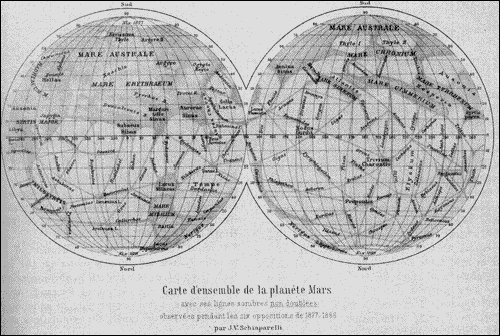
Percival Lowell (1855-1916) was a noted American mathematician and astronomer who founded the Lowell Observatory in Flagstaff, Arizona in 1894.  Lowell built upon the earlier work of an Italian astronomer who sought to explain the lines that appeared to traverse the surface of Mars.  After years of study, Lowell ultimately concluded that these lines were too symmetrical and systematic to have been natural phenomena and that they were actually a system of canals which channeled water from the planet’s melting polar caps.  In Lowell’s estimation, the canals had to have been constructed by an intelligent civilization.  Despite the inability of other astronomers to see the canals and Lowell’s own admission that he could only see them at certain times, his book Mars and Its Canals was published in 1906.

Subsequent astronomical study of Mars and more recent unmanned exploration of the planet have revealed that there are no melting polar caps, no canals, and no evidence of habitation by intelligent beings.  How could Percival Lowell have been so wrong?  It wasn’t a lack of intelligence.  He was a brilliant man.  Long before Pluto’s discovery in 1930, Lowell had postulated the existence of a ninth planet, Planet X , based on his observations of Uranus and Neptune.  Never mind that Pluto has since lost its full planetary status; Lowell was right about its existence.  So, why was he so mistaken about Mars?  Some have postulated that it was an eye disorder or just an optical illusion, perhaps one fed by what he wanted to see.

Scripture is replete with warnings against making hasty judgments, especially those that are based on nothing more than external appearances.  We are challenged to not be so blatantly superficial and shallow in our estimation of others.  After being initially impressed with Jesse’s son Eliab, the prophet Samuel was admonished by the Lord, “Do not look at his appearance or at the height of his stature, because I have rejected him; for God sees not as man sees, for man looks at the outward appearance, but the Lord looks at the heart” (I Samuel 16:7).   Jesus put it this way, “Do not judge according to appearance, but judge with righteous judgment” (John 7:24). 

One’s height, weight, skin color, hair (either its color or amount), attractiveness, manner of dress, quality of clothing, jewelry, tattoos, piercings, etc., are not the criteria by which we are to evaluate others.  What we think these externals may say about someone is often very far from the truth of their real identity as a person created in the image of God.

When it comes to making judgments (and there are some that we have to make), proceed with caution; extreme caution.  We must make sure that our judgments are not hypercritical and hypocritical.  Remember Jesus’ description of someone who needed a tractor and a log chain to pull a rafter out of their head and yet they were preoccupied with wanting to perform micro-surgery on someone else’s eye?  See Matthew 7:1-6 and Romans 2:1-3.  We must not arrogantly pass judgment on the opinions of others in matters of individual conscience and freedom in Christ (I Corinthians 8; Romans 14).  While we may have to evaluate the actions and behavior of another person, passing judgment on their motives or intentions is way above our pay grade.  Only God and His living and active Word are capable of that (Hebrews 4:12).    

We must humbly acknowledge that our judgments are temporal (here and now) and imperfect.  Sometimes they are unnecessarily harsh and often just plain wrong.  God’s judgments, however, are eternal and perfectly infused with both divine justice and mercy.  Our assessments do not obligate God to see things the same way. 

“Therefore, do not go on passing judgment before the time, but wait until the Lord comes who will both bring to light the things hidden in the darkness and disclose the motives of men’s hearts; and then each man’s praise will come to him from God” (I Corinthians 4:5).

It’s hard to believe that The Who’s song “Won’t Get Fooled Again” is 40 years old this year.  I wish the title were true for me.  Despite my best efforts to the contrary, I keep getting fooled when I make superficial judgments of others.

A couple of weeks ago, Bruce Binkley and I enjoyed lunch together at a local restaurant and shared some good Christian fellowship and meaningful, brotherly conversation.  Bruce was sitting to my right, a detail that will help you visualize what happened next.

As we were nearing the end of our meal, I felt something touching the inside of my left arm, which was resting on the table.  I glanced down and noticed some tiny little fingers that were gripping my sleeve just above my elbow.  The fingers belonged to a beautiful little girl with curly, brown hair and big, dark eyes that sparkled with reflections of the lights in the restaurant.  She was looking directly up at me.  When my eyes met hers, she broke into a huge smile, tightened her grip, and pressed her face snuggly against the outside of my arm.  I had never seen the little girl before, and, to my knowledge, she had never seen me. 

The little girl and her mother had been seated next to us for their entire meal, but somehow I had not even looked that direction.  They were in the process of leaving their table when I had the opportunity to make a new little friend.  Her name was Anastasia and she was three years old.  She told me her name and her age in a soft, sweet voice, but it took a repetition of that information by her mother for me to clearly understand.  Her Mom said, “Her name means resurrection,” a fact that I remembered from my study of Greek.  “Her middle name is Zoe,” her mother continued, “from the Greek word that means life.”  I said, “You must have been an Easter baby, Anastasia!”

After a few more “arm hugs,” Anastasia and her mother left, but the encounter kept a smile on my face for the rest of the day. 

Anastasia Zoe.  Resurrection Life. 

Jesus said, “I am the resurrection and the life; he who believes in Me will never die” (John 11:25).

Our confident assurance of eternal life is founded on the glorious resurrection of Jesus Christ and His victory over sin, death, hell, and the grave. 

It’s not just “Happy Easter!” It’s “Blessed Easter!”

“World’s Oldest Man Dies.”  I saw this headline last week in an online news feed.  I followed the link and found a very interesting AP article written by Matt Volz.  Walter Breuning passed away last Thursday in Great Falls, Montana, at the age of 114.  Born in 1896, Breuning enjoyed a life span that covered parts of three different centuries!  The article by Volz included Breuning’s simple philosophy of life and sage counsel for others: embrace change, eat two meals a day (“That’s all you need”), work as long as you can, and help others. 

Though I had never heard of Walter Bruening before, there was something strangely familiar about the headline that announced his death, “World’s Oldest Man Dies.”  Where had I seen that before?  The obvious answer is that I (and you) have seen that same headline numerous times over the years, both in print and, in more recent years, in news stories on the internet.  In fact, it was the death of someone else that allowed Breuning to be declared the world’s oldest man on July 18, 2009 by the Guinness Book of World Records.  With Breuning’s death, the men’s longevity crown has now been conferred upon another centenarian who, given his advanced age, will pass the title on to yet another, likely sooner rather than later.  By it’s very nature, it is not a notable distinction that you can hold for very long.  By the way, the world’s oldest person title is still held by Besse Cooper of Monroe, Georgia, who was 26 days older than Breuning.  

Walter Breuning’s death is another reminder of the finite limitations of our earthly existence.  In fact, another of Breuning’s mantras was being able to accept death; “We’re going to die.  Some people are scared of dying.  Never be afraid to die.  Because you’re born to die.”  Whether you live to be 114 like Breuning and Cooper or if you just make it past the “threescore and ten” mark (Psalm 90:10) like my Mom who passed away at the age of 73, we are still just a mist that appears for a little while and then vanishes away (James 4:14).  Wisdom demands that we “number our days” (Psalm 90:12) and “make the most of our time” (Ephesians 4:16).

Life is short; eternity is not. 

Tuesday marked the 150th anniversary of the beginning of the American Civil War.  It is remarkable how much that tragic, brutal, internal conflict within our nation continues to impact our collective consciousness as a people a century and a half later.  Historian Shelby Foote said that you can’t understand the United States unless you understand the Civil War.  I became a huge fan of Foote, with his genteel, Mississippi accent and cadence, through his multiple appearances and observations in Ken Burns’ masterpiece The Civil War, which first aired almost 21 years ago on PBS.  That miniseries opened up my mind and emotions to the realities of Civil War in a way that nothing else has ever done.  Maybe it has something to do with the fact that Hannah was born on Night 4 of the original 5-night broadcast, but my eyes still moisten with tears every time I hear “Ashokan Farewell” played. 

The Civil War pitted brother against brother and resulted in as many casualties as all other U.S. wars combined.  Three older brothers of my great-great-grandfather, William Garrison Pyles, fought in the Civil War, two of them for the Confederacy and one for the Union.  W.G. was too young to enlist.  I wish that letters survived from those ancestral uncles, but, to my knowledge, they do not.  Apparently, like so many other families divided by the war, they found a way to put their differences aside and reunite once the hostilities had ceased.  

While the War Between the States was a “civil” war in the sense that it was fought among the citizenry of the same country, I have serious concerns about another kind of civil war that is raging in our nation.  It is a cultural and political conflict in which “civility” (respect, courtesy, politeness) has been abandoned both in discourse and behavior among those who are vying for ideological dominance.  My primary concern is not that the general population is behaving this way; the world has always acted like the world, and always will.  However, I am much more disturbed by the fact that an ever-growing number of believers in Jesus are willing to set aside the gentleness and peacefulness of Christ in order to advance a political and/or social agenda. 

Although few Christians have resorted to the kind of tactics utilized by the Westboro Baptist Church (see Legal and Loathsome), multitudes have been mesmerized, inspired, and mobilized by media flame-throwers who thrive on name-calling, fear-mongering, and the demonizing of opponents.  Anyone who shares a different view of things is considered un-American, un-patriotic, and un-Christian.  A lot of heat is generated, but very little light.  Opposing viewpoints cannot be rationally considered and weighed because they cannot be heard above the rudeness, shouting, interruptions, and grandstanding.  Even a national tragedy on the scale of 9/11 only succeeds in unifying America’s citizens for a brief period of time before the partisanship and vitriol return.

As a brother in Jesus was recently in the midst of some good ole Christian “Obama Bashing,” I reminded him that he should at least be praying for our Chief Executive because, after all, Mr. Obama was still his President.  “He’s not my President,” he insisted.  He was neither smiling nor kidding when he said it.  I wonder how many Southerners made the same statement about Abraham Lincoln, even before secession and the shooting started?       

Believers who are so concerned about the inclusion of “under God” in the Pledge of Allegiance should give equal consideration as to whether their attitudes, actions, and words are contributing to the removal of “one nation” from the same pledge.

In 2001, my Bible was literally coming apart at the seams.  The leather binding was scuffed, scarred, and torn.  There were several sections (including most of Genesis, a large portion of II Corinthians, and the maps in the back) that had completely torn loose from the binding and would slip out and fall to the floor at very inopportune times.  Given the rather cozy confines of our assembly area in the modular building at the McDermott Road church, the condition of my Bible was clearly visible to many people in the congregation.  Among those who noticed the rapid disintegration of my Sword was I.B. Huff.

I.B. & Dolores Huff were among the first to place membership at McDermott Road after we started meeting on site in April of 2000.  I.B. was retired and was very skilled in the use of his hands.  He graciously contributed his time and talents in helping out with maintenance needs and repairs.  Although I.B. went home to be with Lord about 2 1/2 years ago, I am sure that there are still many handles, hooks, switches, hinges, and other hardware in the modular building that bear his fingerprints.

One Sunday, I.B. told me that he had some previous experience with book binding and repair and that he would be glad to take my Bible home and bring it back to me that Wednesday night.  Over the course of the next year or so, I.B. did two or three more emergency “patch jobs” on my Bible, even utilizing duct tape and then coloring it black with a magic marker.  Ultimately though, it reached the point of no return, and I was faced with the prospect of replacing my Bible.

The thought of buying a new Bible caused me quite a bit of anxiety.  While I had a couple of dozen Bibles in a wide variety of translations on the book shelves in my office, my personal Bible that I used in study, preaching, and teaching had become as comfortable to me as a well-worn glove.  I knew my way around it.  Even if I couldn’t remember the exact chapter and verse of a passage that I was looking for, I knew that it appeared in the right hand column of the left hand page near the end of Hebrews.  That kind of “visual memory” based on the layout of my Bible was invaluable to me.  How long would it take me to adjust to a different Bible?

Thankfully, I was able to find another New American Standard Bible (1995 Update) in the exact same edition by the same publisher.  Everything was laid out on the page precisely like my old Bible.  Passages of Scripture were in “their old familiar places.”  I was thrilled, but I learned a valuable lesson that has kept me from going through that kind of anxiety again.  Not knowing how long the publisher would continue printing that particular edition, I purchased an ample supply of them to keep in reserve.  I have retired two Bibles since then (yes, I’m pretty rough on them), but I still have three more, still shrink wrapped and in their boxes. 

This may never be a problem for you if you are not as OCD as I am or if you have transitioned to an electronic Bible in multiple translations on your BlackBerry, iPhone, Kindle, or Nook.  But, if you are old school like me about having a printed Bible, let me suggest that you “invest in the future” by buying at least a couple of additional copies of your preferred translation to save for the rainy day on which your Bible completely falls apart or is lost.  The peace of mind and comfort of spirit is well worth the expense!        

"For the Love of Basketball" - Painting by Michael Macaulay

Kim and I were really pulling for Butler University in Monday night’s NCAA Men’s Basketball Championship Game against Connecticut.  For a school the size of Butler to make it to the final game of the Big Dance two years in a row was simply remarkable.  Though I expected Butler to have their hands full with UConn, I had hoped that they could keep the game close and perhaps come out on the winning side of a nail-biter like their one-point loss to Duke in last year’s final.  What we watched instead was the ugliest first half of a basketball game that I have ever seen.  Call it a defensive struggle if you want, it was a surreal comedy of errors on the part of both teams.  Butler led 22-19 at halftime (yes, that’s a basketball score!), but UConn took control in the second half and managed a 53-41 victory.

Despite the disappointment that Butler’s players, coaching staff, and fans are feeling right now, I am fairly confident that the pain of the loss will gradually diminish and will be absorbed into the perspective of the larger issues of life.  While there is much to criticize about the money-making machine that is the NCAA, I do appreciate the commercial in which it is pointed out that the vast majority of the organization’s 380,000 student-athletes will go pro in something other than sports.  At its finest, discipline and commitment are learned, loyalty and team spirit are instilled, character and sportsmanship are developed, relationships are forged, memories are made, and life goes on.  Wins and losses on the court fade in importance.

Just ask the young men who have played basketball at the California Institute of Technology over the last three decades.  Do you remember what you were doing on January 23, 1985.  I know; it was a long, long time ago.  That night, Caltech, a Division III school in the Southern California Intercollegiate Athletic Conference, beat La Verne 48-47.  Caltech would not win another basketball game against a conference opponent until six weeks ago.  Their 46-45 victory over Occidental College on February 22 brought an end to a 310-game losing streak that lasted over 26 years.

Hoopsters at Caltech are probably way ahead of fellow student-athletes at other colleges and universities in figuring out that some things (many, actually) are bigger than basketball.  Caltech is renowned for its training of scientists and engineers.  The school is home to NASA’s Jet Propulsion Laboratory, and Caltech boasts 31 Nobel Prize recipients among its faculty and alumni.  Those kinds of honors and achievements tend to help you cope with a 26-year losing streak.

I still love my hoops.  But, in the end, it’s just a game.

By the way, congratulations to the Lady Aggies for securing the women’s national championship for Texas A&M last night!  Caltech’s women’s team?  They went 0-25 this season.  Oh well, there’s always next year, or maybe not.  But, that’s okay!  Seriously!

Though I am not what you would call an avid moviegoer, I still enjoy occasional “escapes from reality” by getting lost in the story line of a good motion picture for 90 to 120 minutes.  My favorites lately seem to be of the animated variety.  But, more and more I am being drawn to the documentary genre.  Rather than causing us to temporarily check out from reality, documentaries have the ability to draw us more closely to it and to focus our attention on aspects of reality that may be obscured by our own limited viewpoints and personal experience.  And, to paraphrase Bill Cosby in his opening narration on Fat Albert and the Cosby Kids, “If you’re not careful, you might just learn something.” 

Last week, Kim and I watched God Grew Tired of Us, a 2006 film which documents the plight of the Lost Boys of Sudan.  Fleeing their worn-torn homeland, nearly 30,000 orphaned and displaced Southern Sudanese boys set out on a journey of survival.  On their trek of hundreds of miles, thousands died from starvation, dehydration, disease, and military attacks.  Many made it to Ethiopia, but the outbreak of civil war there forced them to flee again.  They kept walking until they reached the Kakuma refugee camp in Kenya.

Beginning in 2001, religious and humanitarian organizations succeeded in bringing about 3,800 Lost Boys to the U.S., settling them in 38 cities across the country.  God Grew Tired of Us closely follows the journey of three of them, John Bul Dau, Daniel Pach, and Panther Bior.  The physical, emotional, and cultural shift from their former life of bare existence to living in a land of plenty is about as radical as it gets.  Light switches, refrigerators, flushing toilets, showers, and escalators were all completely foreign to them. 

It was wonderful to observe that these Sudanese refugees did not become mesmerized by so much of what characterizes American culture.  Rather than being enamored with gaining more “stuff” for themselves, they worked multiple jobs in order to send money back to friends and surviving family members in Africa.  Material prosperity could not replace the close-knit bond that had been forged among their Lost Boy brothers.  After seeing Christmas trees and Santa Claus at a mall, John Dau asks, “Is that in the Bible?  Is Santa Claus in the Bible?”  He remembered the “spiritual preparation” that he and others used to go through as the commemoration of Jesus’ birth drew near each year; contemplation and meditation rather than ribbons and bows, glitz and glitter.  It was more about Presence than presents. 

The movie’s title comes from a statement that John Dau made as he tried to make sense of the senseless: the incalculable brutality, suffering, and death caused by the war in Sudan and the human wreckage that was left in its wake.  “God grew tired of us,” he said.  He reminded me of Job, who over 4,000 years ago struggled to reconcile the same issues of suffering, pain, injustice, and loss with God’s existence and sovereignty.

The Lost Boys of Sudan demonstrated such great courage, determination, and love on their journey.  Teens and pre-teens became the heads of “families” made up of younger boys.  They did their best to find food and water for them, and shouldered the difficult task of burying those who succumbed to hunger and the elements.

The film is moving and inspiring and serves as a great reminder of just how blessed most of us are.  And, in its own way, it provides a subtle rebuke to us for often doing so very little with the abundance of blessings and opportunities that we have been given.

As I conclude my thoughts this week on the “cloud of witnesses” mentioned in Hebrews 12:1, I want to share the words of an old hymn that I came across.   I wasn’t able to find conclusive information about its authorship, but one source suggested that it was written by John Logan (1748-1788), an 18th century Scottish minister and poet.  “Lo! What a Cloud of Witnesses” beautifully captures the thoughts of Hebrews 12:1-3.  The author acknowledges the reality of the encouraging examples of God’s faithful ones who have gone before us, yet still keeps our eyes fixed firmly on Jesus Christ.  

Lo! What a Cloud of Witnesses

Lo!  What a cloud of witnesses
Encompass us around
Men once like us with suffering tried
But now with glory crowned

Let us with zeal like theirs inspired 
Strive in the Christian race 
And freed from every weight of sin 
Their holy footsteps trace 

Behold a Witness nobler still 
Who trod affliction’s path
Jesus, the author, finisher
Rewarder of our faith 

He, for the joy before Him set 
And moved by pitying love
Endured the cross, despised the shame 
And now He reigns above 

Thither, forgetting things behind
Press we on to God’s right hand
There, with the Savior and His saints
Triumphantly to stand

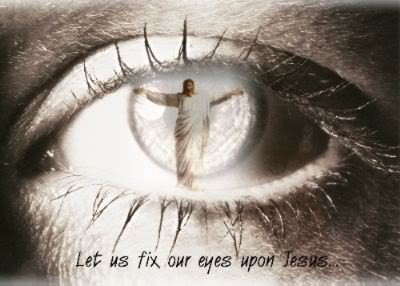
Yesterday, I suggested that the most accurate view of the “cloud of witnesses” in Hebrews 12:1 may be to see these heroes of faith as “witnesses of God” rather than “spectators of us.”  By their lives and examples, they testify to God’s faithfulness and verify for us that the race of faith can be run successfully.  This view puts more emphasis on the meaning of martus as a witness/testifier, rather than imagining a celestial stadium full of spectators watching and cheering those who are still running the race here on earth.  I also believe that this view better fits the context of Hebrews 12:1-3 in keeping “all eyes fixed on Jesus” rather than having the gaze of departed saints trained toward us.      

Yet, there is indeed a “cloud of witnesses” which exists to encourage, cheer, strengthen, and motivate us in our race of faith.  It is the body of believers that surrounds us in the church of Jesus Christ.  Consider the vast volume of “one another” passages in the New Testament.  We have a huge responsibility for one another in the here and now.  Suffice it to say that the hands, shoulders, words, and compassion of my contemporary fellow traveler/disciples is of far greater practical benefit to me than the notion of quasi-omniscient departed saints and martyrs who have a full view of my life through a two-way mirror that divides the seen from the unseen realm.  This latter concept might be more unsettling than comforting at times.  

Though Christian singer/songwriter Mark Schultz ultimately gets to the idea of a glorious reception by those who have gone before us as we finish our race, most of his song, Cloud of Witnesses, focuses on the blessing of fellow believers that we have in the here and now.

Cloud of Witnesses
(Words and Music by Mark Schultz)

We watched them runnin’ down the aisles
Children’s time, Sunday morning
The preacher asked them who they loved
They all smiled and started pointing to their mom, their dad
The teacher from their kindergarten class
And each and every one had just come from

A cloud of witnesses that would see them through the years
Cheer them with a smile and pray them through the tears
A cloud of witnesses that would see them to the end
And shower them with love that never ends
A cloud of witnesses

They stuck together through the years
The best of friends faith could foster
So when they found out one of them
Had heard the news he’d lost his father
They ran to him and prayed
And put their hands upon his head
And slowly one by one they’d all become

A cloud of witnesses
As they sent above a prayer
They took hold of hands and
circled ’round a friend
A cloud of witnesses with a faith just like a rock
They helped him give his father back to God
As a cloud of witnesses

So when it comes the time that heaven calls
They’ll come running to see the ones who’ve gone before
And made the journey home to find waiting for them at the finish line
Cheerin’ happily they will run and they will see

A cloud of witnesses
Lined up on a street of gold
As they run the final mile
That leads them to a throne
And through the cloud of witnesses
They see God upon the throne
And as they fall into His arms
They know they’re home in
A cloud of witnesses
Surrounded by a cloud of witnesses

We watched them runnin’ down the aisles
Children’s time, Sunday morning

Enter your email address to subscribe to this blog and receive notifications of new posts by email.

Join 175 other subscribers

Archives

February 2026
S M T W T F S
1234567
891011121314
15161718192021
22232425262728