Somewhere in rural, southern Arkansas this summer, my family and I drove past a church’s marquee sign which read, “Some Assembly Required.”  “Clever,” I thought.  “Quite clever, indeed!”  The implications of the sign’s message kept rattling around in my head off and on during the remainder of our journey home from vacation.  I wondered if some astute, local church member had dreamed that one up, or if it had pre-existed in the larger public domain of “churchy” quips and quotes.  It turns out that it was the latter.  A quick Google search the next day revealed that the longer version (requiring far more letters and a bigger sign) reads, “The church is a gift from God; some assembly required.”

While true Christian faith is based on a personal, individual relationship with Jesus Christ as Savior and Lord, it is equally true that God has chosen to keep His children in community; He adds us to a family, a body, a kingdom of believers, His church.  It is within this community of faith that many of us have likely experienced some of our most precious spiritual memories, as well as our worst ecclesiastical nightmares.  It is with the “church assembled” that we have shared laughter and tears and felt the weight of burdens lifted by a loving Christian family.  It is also where we have likely had our feelings hurt, felt like a complete stranger, or had salt rubbed in our wounds.  We have been in assemblies in which we felt transported to the very throne of God by voices and hearts united in praise, and we have also been in gatherings where we sensed that the Spirit was a million miles away; or perhaps it was our own emotional distance that was responsible for that feeling.  Such are the highs and lows, the joys and sorrows, the blessings and disappointments of life in the Body of Christ.

Yet, it is good to be reminded that our failures and foibles in the implementation and execution of God’s plan for His people do not negate His divine wisdom in calling us to assemble and to share our common faith in a living and dynamic community. 

Carolyn Arends shares a brilliantly insightful opinion piece entitled, “Taste the Soup,” in her “Wrestling with Angels” column in the current issue of Christianity Today.  It captures and articulates the thoughts and feelings that I had been mulling over ever since I saw the “Some Assembly Required” sign.  She expresses these sentiments so effectively that I wish I could just provide a link to the article, but it is currently unavailable on CT’s website.  However, it will likely appear on Arends’ blog sometime soon.  I’ll share a few excerpts in hopes that you will soon be able to read it in its entirety.   Arends’ title comes from an illustration in which an annoyed restaurant patron repeatedly asks the server to “taste the soup” in order to communicate that no spoon has been provided on the table.  Her point:  “Sometimes you have to do what is being asked of you before you understand why it’s required.”

Arends writes:

“Lately, for me, the command to ‘taste the soup’ has been about attending church.  Trouble is, I just haven’t felt like going.”

“I’ve been sliding into pews (or modern equivalents) from infancy; my vocation has taken me to hundreds of churches around the world.  I’ve met some of my dearest friends and endured some of my darkest betrayals in youth rooms, foyers, and sanctuaries.  I’ve cried, sung, prayed, committed, disconnected, recommitted, scribbled sermon notes, doodled, been wounded, been healed, encountered the Mystery, and dozed off – sometimes all in the same service.”

“Like anyone who has logged serious pew time, I’ve got reasons to be jaded.  I’ve seen churches split over trivia while they trivialize glaring immorality amongst their leaders.  I’ve encountered gossip posing as prayer, and bullying masquerading as ‘spiritual guidance.’  I’ve watched the realignment and reduction of the gospel into a business plan for membership growth or personal improvement.”

“People who complain that church is boring have no idea.  Church is scary.”

“There’s just one problem.  Beneath my rhetoric of antilegalism, enlightenment, and self-protection there remains a still, small – but increasingly insistent – voice.  And it’s telling me to taste the soup.”

“Obedience in this area is simply intentional proximity with a group of people who love Jesus and each other.  It is coming together to his table, if only because that is what he asks us to do.  And it is trusting that he’ll show us not only the spoons we’re missing, but also the feast he has in store.”

Thank you, Carolyn!

We assemble as Christians, not because we serve some cranky, attendance-taking Divine Curmudgeon who delights in marking us down for unexcused absences, but for reasons of our own spiritual benefit, and that of others through us.  

If it has been quite a while since you last assembled with other Christians for praise and fellowship, let me encourage you and challenge you to muster up the resolve to do so this Sunday.  I know that I’m asking a lot, because some of you have been severely wounded, neglected, misunderstood, or perhaps just “overlooked” rather than “overseen” in the shepherding ministry of the church’s leadership.  All of these negative experiences are caused by the fact that churches are made up of people exactly like ourselves, plagued by similar weaknesses and failings. 

“Taste the soup” this Sunday, and be open to the multiple reasons why God calls us together.  He may be counting on you to be there to reach out to someone who really needs you, someone to whom you can extend understanding and compassion because of your own painful experiences.  I pray that healing will begin to overcome the hurt.
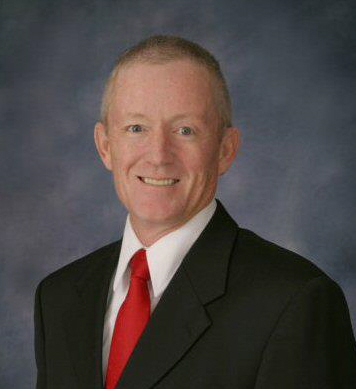
Kent Smith, a dear friend and brother in Christ, went home to be with the Lord in the early hours of last Thursday, August 30, after a courageous and inspiring battle with T-cell lymphoma.  Kent touched the lives and hearts of so many people in so many different ways over the course of his life: as a son, brother, husband, father, grandfather, farmer, cotton ginner, AIMer, youth minister, teacher, preacher, worship leader, elder, deacon, missionary, storyteller, author, encourager, co-worker, and friend.

Kent and Paula had just placed membership at the McDermott Road church when my family and I joined the work of that congregation in ministry in September of 1999.  We were still meeting in the facilities of the Waterview church at the time.  Kent would soon be serving on the Steering Committee, a group of seven men who provided leadership for the congregation in the early days of the church plant as it transitioned to its own facilities in north Plano.  Kent’s very obvious faith, maturity, giftedness, and passion for Christ resulted in him being asked to serve among the congregation’s first elders.  He served well, exhibiting the heart of a true shepherd.  As deeply as Kent felt called to serve as an elder, he, along with others, demonstrated great spiritual strength, courage, and humility in willingly stepping aside from that role of servant-leadership when they believed that it was best.  That selfless act of love for Christ’s church helped to ensure the ongoing stability, spiritual health, and numerical growth of the congregation.  True to his nature, he continued serving in a variety of other ways, right at the heart of the life of the church.  He had a special place in his heart for the work of Christ in Honduras and the Rio Grande Valley where he was involved in numerous mission trips. 

Kent had an extraordinary ability to connect with people’s hearts and lives, a gift that was just as effective in the affluent northern suburbs of Dallas as it had been in rural West Texas.  He loved to teach, especially by exploring how faith in Christ translates into daily life.  He communicated so naturally through stories from his own life and experiences.  When Kent told a good story, it became a great story.  Many of these anecdotes and insights are included in his book, Everyday Christianity: Life Learned Lessons and Observations from an Ordinary Man

Kent was noted for the nicknames which he lovingly gave to family members and friends.  He even nicknamed himself “Grumpy,” which was an immediate and enduring hit.  Kent dubbed me “R.P.”: Reverend Pyles.  He would often call me at the church office about 11:30 in the morning and say, “Hey, R.P.!  If you don’t have any plans for lunch, why don’t we go get ourselves a sandwich?”  Kent had a unique cadence and inflection in saying the word “sandwich.”  Any attempt to explain it in written form would fall short of adequately capturing it, so I won’t even try, but it was quintessentially Kent.  We had many such spontaneous lunch dates.  Kent used to say, “Tim stays awfully busy, but, if you want some of his time, all you have to do is wave a couple of tacos in front of him.”

Kent will be on my mind quite a bit this week.  On Wednesday, I am driving to Abilene to share a lesson with the Oldham Lane church.  On at least two previous speaking engagements there, Kent rode shotgun with me.  Although he had somewhat of an ulterior motive in being able to share a brief visit with his sister who was a member of that congregation, he provided great company on the drive and helped to pass the travel time with a lot of laughter.  We would get to Abilene in time to eat at Cracker Barrel before the service, would stop in at Sonic on the way out of town for something cold and sweet for the road, and would roll back into the Metroplex about 11:30 or midnight.  Our last trip was in July of 2008. 

Among other things that I have scheduled for this Thursday on my return journey from Abilene is a round of golf at Stevens Park in the beautiful Kessler Park area of Oak Cliff.  Kent and I played our first round together there on March 31, 2000.  The date is memorable because it was the Friday before our first Sunday worship services in the new, modular building at McDermott Road on April 2.  The previous Tuesday evening, we had dodged tornadoes which inflicted extensive damage in downtown Fort Worth, Arlington, and Grand Prairie and had threatened to scatter our deca-wide modular all over Collin County.  It was a very exciting but quite stressful time, so Kent suggested that we escape for an afternoon of golf.  Stevens Park was already my favorite course in Dallas, and Kent became the first of my McDermott Road friends to accompany me there.  We would later add Coyote Ridge in Carrollton, Stewart Peninsula in The Colony, and Plantation in Frisco to the course rotation.           

I last visited with Kent and Paula in their home last April.  Though our time was rather brief, it was very encouraging, which was par for the course with Kent.  I was unable to attend Kent’s memorial service last Saturday, but I heard that his son, Josh, and son-in-law, Chad, did an amazing job in honoring and celebrating his life.  All of us love our families, but Kent had an exceptional affection for Paula, their children and their spouses, and their grandchildren.  He was so very proud of each and every one of them.     

When Kent encountered challenges in his life, he always faced them with perseverance and hope.  Setbacks were only temporary, and light always followed the darkness.  There was always a way forward.  Even cancer wasn’t allowed to have the last word.  He utilized his illness just as he had used his entire life, to glorify God and to draw others closer to Jesus. 

Kent shared a message at McDermott Road on July 29, a month before his death, in which he beautifully communicated his faith, his hope, his confidence, and his conviction that “to live is Christ, and to die is gain.”  He didn’t just preach it; he lived it.  You can hear and see Kent’s message by clicking here and scrolling to the bottom of the page.

Thank you, Kent, for leaving such a powerful testimony and lasting legacy of faith and hope for your family, your church family, and your friends.

After Kim and the kids returned from a Spring Break trip this year to see family members in the Southeast, she said, “You know, you and Coleman should take a trip sometime, just the two of you.”  I had been quietly thinking the same thing for about two months.  I told Kim that I had been considering a father/son getaway to St. Louis in early May and had identified a weekend when the Cardinals would be playing at home on a Friday night.  “Book it,” she said!

An inaugural “man trip” was long overdue.  Don’t misunderstand.  I, along with Kim and Hannah, have been intimately involved in every aspect of Coleman’s life throughout the entirety of his 19-year journey.  And, in spite of all of the hospitalizations, diagnoses, specialists, therapies, and struggles, there have always been fun activities in which we have been engaged with Coleman as a family: Special Olympics, Dallas Mavericks games, therapeutic horseback riding, family vacations, and an annual pilgrimage to the beach for the last several years.  But, Coleman and I had never taken off on a long-haul, “just us guys” road trip as many fathers and sons do.  While Coleman’s developmental disabilities and autism would definitely have to be calculated into the equation, these realities wouldn’t be permitted to serve as barriers that had the power to hold us hostage at home. 

So, Coleman and I hit the road on the morning of Thursday, May 10.  It’s a 400-mile, 6-hour drive from Tulsa to St. Louis.  Coleman is about the best traveler you could ever hope to have riding shotgun with you.  He never complains about the temperature in the car, the music (or, in our case, the lack thereof), the glare of the sun, the traffic, or the road conditions.  He has never once asked, “How much longer until we get there?”  His only (but rather frequent) request was to sign “hamburger” and “soda” (meaning Dr. Pepper).  He brought that subject up about every 30 or 45 minutes just to make sure that I hadn’t forgotten his favorite meal of choice.  Coleman would periodically reach over and hold my hand for a few miles, but was perfectly content to just take in the scenery and enjoy the ride.  Since Coleman is non-verbal, a friend asked me after the trip if I would talk to Coleman as we traveled.  Good question!  I would occasionally tell him how much I loved him, what a good boy he was, and how proud I was of him; but, mostly we just rode along in refreshing silence.  Oh, right!  “Hamburger” and “soda.”  Got it!  Again! 

We arrived in St. Louis in the middle of the afternoon and got checked in to our hotel downtown, which was right across from the Gateway Arch and just a couple of blocks from Busch Stadium.  We took an evening stroll over to the Arch, and I allowed Coleman the freedom to just wander around the expansive, grassy grounds.  The design, engineering, and beauty of the Arch still fascinates and astounds me; if Coleman was impressed, it wasn’t noticeably evident. 

On Friday morning, we headed to the St. Louis Zoo.  We arrived to find what looked like a mile-long line of yellow school buses.  With the summer break approaching fast, it was apparently one of the last, best chances for end-of-the-school-year field trips.  We shared the zoo that morning with approximately 20,000 (only an estimate!) elementary-age children.  I had brought Coleman’s wheelchair just because he tends to fatigue rather quickly when a lot of walking is involved.  While his AFO braces help greatly with stability and support, covering 90 acres on foot would definitely be too much for him.  It was perfect “zoo weather,” and we took our time, seeing the exhibits at a leisurely pace and occasionally wheeling off into a safe harbor as periodic “storms” of giddy, screaming school kids passed by.  The only animal that really got Coleman’s attention was a giraffe that we encountered in a tall, indoor shelter.  The giraffe was only a few feet away from us, just on the other side of the enclosure’s steel bars.  Coleman caught sight of its feet, then began looking upward to find the rest of it, ultimately craning his neck to get a glimpse of its head about 18 feet in the air.  I would love to know what Coleman was thinking!  After a full three hours at the zoo, we headed to Imo’s for lunch, which lived up to its recommendation for fantastic local pizza.

We walked to Busch Stadium on Friday evening for the Cardinals vs. Braves game.  When I bought the tickets I had no idea that the Cardinals would be retiring Tony La Russa’s number (#10) in a pre-game ceremony.  Bonus!  It was a fitting honor for La Russa, who had managed the Cards for 16 years and led them to two World Series titles, in addition to many other notable achievements.  An incredible group of baseball greats (including Lou Brock, Tom Seaver, Bob Gibson, Dennis Eckersley, Dave Stewart, Mark McGwire, and Joe Torre) was seated with him in front of home plate, and La Russa’s speech was filled with humility and appreciation.  The home crowd also showed a lot of class that night in giving the Braves’ Chipper Jones a standing ovation when he was introduced.  Jones, playing in his farewell season, was similarly cheered before each at bat in recognition of his stellar career. 

While Coleman prefers sports like football and basketball in which the officials blow whistles, he is quite happy in the open-air setting of a baseball park.  He had been to a few Frisco RoughRiders and Tulsa Drillers games, but this was his first visit to a major league ballpark.  We had great seats in the middle tier overlooking third base.  Hotdogs, peanuts, and a couple of Dr. Peppers kept Coleman satisfied, and he was blessed to sit next to a sweet older lady who didn’t seem to mind at all when he occasionally reached out and held her hand.  The Cardinals were ultimately out-dueled by the Braves 9-7 in 12 innings.  We stayed until the last out, let the crowd clear for about 15 minutes, and then made a sleepy walk back to the hotel about midnight.  

Saturday morning gave us the opportunity to sleep in a little late and then meet my college roommate, Charlie Fike, for breakfast at the hotel.  Although Charlie and I have talked by phone periodically over the years, I had not seen him since the day of my wedding to Kim in March of 1988.  Charlie is the kind of friend with whom you can just pick up where you left off, even if it has been several years since your last conversation.  No one can make me laugh like Charlie Fike!  Coleman happily watched movies on his portable DVD player while Charlie and I spent a couple of hours catching up on life, family, and faith.

After that, it was check-out time at the hotel and then an enjoyable drive back to Tulsa. 

Thanks, Coleman!  I couldn’t be prouder of you or more grateful to have shared this “man trip.”  I hope and pray that there will be many more to come.   

Wisdom would dictate that I should probably just leave well enough alone in regard to this polarizing and admittedly tiresome subject, but, nonetheless, here are a few concluding thoughts.  

1)  I ate at Chick-fil-A on Wednesday.  If that surprises you, then you didn’t read my previous post very carefully.  As I wrote before, I love Chick-fil-A’s food and I greatly respect their corporate leadership, values, and philosophy of business.  I stopped by and picked up a couple of yogurt parfaits on my way to the office, reasoning that it would be far less crowded than later in the day; a wise decision, as it turned out.  I was more than happy to make the purchase, but I in no way saw it (or felt about it) as participating in some great moral victory, or a mighty blow against the forces of evil, and certainly not as “a mighty work of God,” as I saw it described in comments on Facebook.  The Lord indeed moves in mysterious ways, but I doubt that mass consumerism is among them.       

2)  I have been reminded that PC (political correctness) has siblings named CC (conservative correctness) and EC (evangelical correctness) that are alive, well, and just as robust and domineering as their secular, liberal sister.  Conformity is rewarded; questioning the party line is highly suspect and discouraged; deviation is dangerous and counts as disloyalty.  The litmus tests and shibboleths differ in their particulars, but they exist just the same.

3)  I trust that people’s motives and attitudes were as they should have been on Wednesday, but, just in case someone got a little excited and forgot to keep things in proper perspective, let me offer up the words of Jesus from Luke 18:10-12.  “Two men went up to the temple to pray, one a Pharisee and the other a tax collector.  The Pharisee stood and was praying this to himself, ‘God I thank you that I am not like other people: swindlers, unjust, adulterers, or even like this tax collector (or fill in the blank).  I fast twice a week; I pay tithes of all I get; I ate at Chick-fil-A on Wednesday…”  You know the rest of the story.  Apply only as needed. 

4)  “Like me, like me!  Tell me I’m pretty!”  I still believe that far too many within the Christian community cling to a naive (and somewhat narcissistic) hope of being understood, respected, loved, and appreciated by our larger culture.  And every time that doesn’t happen, when we are called backward, ignorant, unsophisticated, intolerant, cultural Neanderthals, we get our feelings hurt and begin to squawk (or cluck, or crow).  Jesus warned us about this up front, friends.  “If they have called the head of the house Beelzebub, how much more will they malign the members of his household” (Matthew 10:25).  Despite the repeated heads-up from the Scriptures, we still react with incredulous surprise, “as though some strange thing were happening to us” (I Peter 4:12).  I hate to break it to you, but the world is never going to ask the church to the prom!  We need to get over it. 

5)  The following is excerpted from my response to a friend’s comment on the previous post: 

I would agree with you that the U.S. still remains a beacon to the world in many respects, but I would suggest that the moral rout is already well underway and has been for quite some time on multiple fronts: violence and crime, drug addiction, alcoholism, sexual promiscuity (not only tolerated, but celebrated through the pornography industry and mainstream Hollywood), domestic abuse, sexual abuse, white-collar crime, and on and on the list goes. For that reason, I believe that the identification (by many well-intentioned people) of gay marriage as “the” moral issue of our time or the critical issue that is holding back a tsunami of evil is just myopic and misdirected.

I think you know me well enough to know that I am not defending or advocating gay marriage, encouraging moral complacency, or recommending that socially and religiously conservative people just lay down and roll over on this one or throw in the cultural towel.

I do, however, believe that Christians should be much more thoughtful and prayerful (and much less reactionary) in their responses to issues that challenge our faith and values.  My blog post was intended to call and challenge Christians to that kind of introspection and accountability to a higher standard.

6)  I mailed a donation on Wednesday to WinShape Homes, one of several inspiring divisions within Chick-fil-A’s WinShape Foundation. WinShape Homes “provides a safe, caring and stable home environment for children who are victims of circumstance – a place where they can grow into strong, confident men and women.”  The lady with whom I spoke on the phone on Monday was as kind, welcoming, and helpful as the innumerable young people at Chick-fil-A service counters and drive-thru windows that I have encountered over the years.  My yogurt parfaits burned off by about 11:00 a.m. Wednesday, but I am confident that WinShape Homes can provide a much more lasting benefit for some young man or young woman who just needs a fair chance in life.  Their address, if you would like to contribute, is WinShape Homes, 5200 Buffington Rd., Atlanta, GA, 30349.

I will close before these Nuggets turn into Strips.

His name is Nikita, and he made an indelible impression on my heart.  I don’t have a photograph of him, but I can see his face so clearly in my mind.  

I met Nikita two years ago on my first trip to Ukraine.  Our mission team had already enjoyed a successful week of VBS/Bible Camp in Yasinovataya, and it was Day One of working with a new group of children in Gorlovka.  I was teaching the oldest group of kids, those in their early to mid-teens.  Nikita, a tall, slender young man with dark hair, first caught my attention as we were getting our morning session started by making name tags to wear on lanyards.  Through my translator, Dima, I had asked the children to write their names in Russian and English (with assistance, if needed).  Nikita just fumbled with the materials for several minutes until someone thoughtfully wrote his name for him, slid the name card into the plastic sleeve, clipped it to the lanyard, and placed it around his neck.  It was then that I began to perceive “shades of Coleman” and indications of autism.

When Nikita spoke, his voice was rather loud, he stuttered, and he often blurted things out at unexpected moments.  His hands were in near-constant motion, sometimes just moving about, and at other times intensely focused on some object.  By mid-morning, he had completely dismantled his name tag, shredding both the paper and the plastic sleeve.  We made him another.  After he dispensed with three of them on the first day, we decided that Nikita really didn’t need a name tag.  

I moved Nikita’s chair next to mine at the table and gave him some blank sheets of paper and some markers.  It kept him happily occupied while we had our class discussions.  His kinesthetic activities and self-stimulatory behaviors, however, were in no way indicative of a lack of interest or comprehension of what was going on around him.  He would frequently respond to questions that I asked.  Sometimes Dima would translate Nikita’s answers for me, but I needed no help in understanding when he quickly replied with a repetitive “da” or “nyet.” 

Nikita’s mother had stayed nearby throughout the morning and approached me at the beginning our lunch break.  Through Dima, she expressed concerns that Nikita might be a distraction and wanted assurances that it was alright for him to remain with the others in the class.  That gave me an opportunity to briefly tell her about my son Coleman.  I explained to her that I, too, had an autistic son.  Like Nikita, he had dark hair and dark eyes that danced when he smiled.  Her eyes began to fill with tears, and she gave me a long embrace.  I assured her that I understood, that I had so much respect and admiration for her and the love and care that she provided for her son, and that Nikita would be fine.

Nearly every day that week I sat at the table with Nikita and his mother during lunch.  She lovingly assisted him with his meals, as we still do with Coleman.  One day Nikita was wearing flip-flops that were glaringly much too small for his long feet, the entire length of his heels dragging the ground behind them.  Members of our team expressed concern to Nikita’s mother, along with an offer to provide money for new shoes.  She smiled and explained that the flip-flops were hers, but that Nikita had chosen them that morning before they left their apartment and was insistent on wearing them.  Been there, done that!  You choose your battles carefully with autistic children, and “appearances” soon slide way down the list of things that are worth fretting over.

Nikita and his mother presented me with a box of chocolates on Thursday evening after our closing Family Night presentations and activities.  Nikita gave me a tight hug before they left for their home.  I was hopeful that they would stay connected with the church in Gorlovka in the weeks and months that followed, but apparently they did not.  When a team from our church returned there last year, they were told that Nikita had not been seen again and that no one had an address for them. 

Nikita and his mother have stayed on my mind and heart over the last two years.  I held out hope that they would show up at the church in Gorlovka on Monday morning three weeks ago when our group was starting this year’s VBS, but they didn’t.

Yet, Wednesday of that week provided a brief, but joyful, reunion!  We had taken our class to a park across the street to play a water balloon tossing game that was a huge hit with kids in the heat and humidity of a Ukrainian summer.  That’s when I noticed Nikita and his mother walking toward our group.  I caught sight of them about the same time they saw me.  There were smiles and hugs shared, but only a brief conversation as they explained that they were in a hurry to get to the nearby supermarket to buy a few food items and were pressed for time to reach some scheduled activity.  About 15 minutes later, they walked back by us.  Nikita ran to me, presented me with a chocolate bar, gave me a firm kiss on my cheek, and then quickly caught up with his mother.  No words were exchanged, but it made my day, my week, and my trip!

I hope that I can connect with Nikita and his mother again on a future trip to Gorlovka or through Christian friends who live there.  Coleman has access to so many resources, assistive devices, and a large, loving support network that make his life and circumstances (and ours) so much easier to bear.  We are blessed; I know we are; and it weighs on my heart heavily when I consider how little of those things Nikita and his mother may have.

But, one thing I know.  I know where I will find Nikita in eternity.  I will find him living joyfully and freely in the presence of his Creator, released from limitations, perfected and whole, and occupying a prominent place of honor in the Blessed Order of the Least of These.

First of all, an admission and a bit of personal history: I love Chick-fil-A.

My first Chick-fil-A sandwich was eaten at Eastdale Mall in Montgomery, Alabama, shortly after my family moved to town in the summer of 1979.  It has been over 30 years since I have visited that mall, but, if the store still exists in the same location, I could walk straight to it like a guided missile.  My life since then can be somewhat timelined by the significant “Chicks” along the way:  Florence, Alabama, in the mid-90s where I witnessed the construction of the first stand alone, “mall-less” store that I had ever seen (in actuality it was built just outside the mall); Allen, Texas, where our weekly men’s breakfast from the McDermott Road church met for a short time and where several of the congregation’s youth would ultimately work; the store in McKinney where Richard Beasley and I would eat after a morning round of golf at Oak Hollow; the store in The Colony where Jeff Jenkins and I would meet regularly for breakfast and conversation; and the innumerable stores across multiple states where my family and I have dined in and “driven thru.”  

I have long admired (and occasionally been selfishly annoyed by) Chick-fil-A’s company-wide policy of being closed on Sundays so that employees can attend worship services and spend time with their families.  I greatly respect that kind of “principle over profit” approach to business.  I have also deeply respected the Christian faith of the Cathy family in the founding and leadership of their company.  Several friends of mine have heard Truett Cathy and Dan Cathy speak at leadership conferences and business conventions over the years and they have been profoundly impressed by their authenticity, humility, and commitment to biblical morality and values.

Despite all of the considerations above, the primary reason that I eat at Chick-fil-A is that I really, really, really like their food.  Truth be told, I would eat there if their founder and CEO was a Muslim, a Buddhist, or an atheist.  I go to Chick-fil-A for good chicken, not to make statements about my faith, morals, or politics.  If the food weren’t good, I wouldn’t eat there, not even if the company’s founder was the person who had led me to faith in Christ.  I would unquestionably love him and be eternally grateful to him, but I wouldn’t buy his chicken.  If Chick-fil-A was open on the Lord’s Day, you would periodically find me having Sunday lunch there, despite the fact that employees were being forced to miss morning church services or prevented from playing with their kids at the park.      

By now, most of you are aware of the latest skirmish in our nation’s culture war involving supporters of gay marriage and supporters of Chick-fil-A CEO Dan Cathy and his vocal defense of traditional marriage between a man and a woman.  I won’t rehearse the entire history of past clashes between Chick-fil-A and the LGBT community, but Cathy’s recent comments resulted in the Jim Henson Company pulling its Muppet toys from Chick-fil-A’s kids’ meals.  The mayors of Boston, Chicago, and San Francisco went on record as saying that Chick-fil-A’s values did not reflect those of their citizens and, therefore, the Atlanta-based company “need not apply” for building permits or business licenses in their cities.

The Christian counter-offensive has been swift and emotional.  I have been made aware of this most keenly from Facebook, where there has been a steady stream of admonitions to join hands, wallets, and palates for “Chick-fil-A Appreciation Day” on Wednesday, August 1.  Organizer Mike Huckabee (or someone very effectively impersonating him on FB!) is “asking people to eat chicken and not to be one” by turning out in force this Wednesday to support Chick-fil-A with our fast food dollars.  This effort has picked up endorsements from several significant individuals and organizations.

Just a few observations, primarily for the consideration of fellow believers. 

Can we all just take a deep breath and chill a little, my brothers and sisters?

The reactions from the mayors in Boston, Chicago, and San Francisco are predictable, political rhetoric solely intended to further endear them to their constituencies.  Their position is unreasonable and irrational, not to mention unconstitutional.  Their threat of opposition to Chick-fil-A’s expansion in their cities will never stand.  If they haven’t already figured this out for themselves, I assure you that their City Attorneys have done so and have reminded Their Honors of a little complication called the First Amendment.  This glaring, potential injustice was even pointed out rather quickly by the ACLU and several liberal columnists.  Political posturing at the expense of free speech and free enterprise just won’t be tolerated in the U.S., at least not at the present.  I would highly recommend for your reading an editorial in the current issue of Christianity Today entitled, “More Than a Legal Issue: The Gay Marriage Debate Shouldn’t Drive Us to Outrage or Panic.”  Published before the latest brouhaha, the subtitle is eerily prophetic. 

A few of the graphics that I have seen on Facebook featured the “Eat Mor Chikin” Holsteins displaying placards that read, “One Man; One Woman” in support of the Biblical doctrine of marriage.  Some of us are old enough to remember when this mantra contained a third phrase, “For Life.”  That last one doesn’t sell as well anymore, even (and maybe especially) among Christians.  Sadly, the divorce rate among Christians in the United States is not radically different from that of the larger culture.  Regardless of your understanding of the teaching of Jesus and the Apostle Paul on the subject, it is hard to imagine that the contemporary practice of disposable marriage among believers somehow reflects the will of God for our families.  “Inviting God’s judgment on our nation when we shake our fist at Him” regarding marriage (to quote Dan Cathy) did not begin with the recent efforts to legalize gay marriage.  Having surrendered the moral high ground on the biblical model of marriage a long time ago, the call by Christians for the defense of “traditional marriage” tends to ring a bit hollow these days and invites charges of hypocrisy from skeptics and critics of our faith. 

I would be remiss if I didn’t also mention that the presumptive Republican presidential nominee, for whom millions of Chick-fil-A supporters will likely vote in November, is a member of a faith tradition that, while being solid on the “one man” aspect of marriage, has, historically speaking, been rather fuzzy on the number of women who can simultaneously share in the matrimonial equation.  The “mathematics of marriage” in Mormonism hasn’t always been an exact science.  Sorry, folks, but it needed to be said.

Chick-fil-A-Gate has also reminded me just how easily we Christians can get our knickers in a twist.  When something doesn’t go our way (and why should things ever go our way in a world that largely does not share our faith and values?) we tend to get just as “loud and proud” as the next “victimized” group.  I wish that our responses weren’t so painfully predictable when we are gigged and goaded by others.  We whine, cry foul, and vehemently insist on our rights, all at the expense of gutting our witness as followers of Christ.  We vainly claim persecution at the slightest offense, while believers in other parts of the world truly suffer (and sometimes die) for their faith.  “When we are reviled, we bless; when we are persecuted, we endure; when we are slandered, we try to conciliate; we have become as the scum of the world, the dregs of all things,” (I Cor. 4:12-13).  Our many liberties have spoiled American Christians into indignant discontent with being the scum and dregs of the earth; we simply won’t have it.            

Might I make a suggestion for those who really want to show their support for Chick-fil-A and for others this Wednesday?  Instead of the mere quid pro quo of giving Chick-fil-A money in exchange for a meal that you might have purchased anyway (where is the sacrifice and heroism in that?), why not just walk into the store and make a donation of $10, $50, or $100, asking for nothing in return.  Don’t like the non-tax-deductible sound of that?  Then make a donation to the company’s incredibly inspiring WinShape Foundation!  I assure you that your money will be put to good use.  How about purchasing $50 worth of meals and taking them to a homeless shelter, or contacting your local fire station and letting them know that you’ll be providing a Chick-fil-A lunch on Wednesday for those on the afternoon shift; anything beyond satisfying your own hunger with a #1 Combo in the name of morality.                            

So, will I be eating at Chick-fil-A this Wednesday?  I may, if the lines aren’t too long (and they frequently are, to the tune of $4.1 billion in sales last year).  And if I do, it won’t be because I’ve been bullied into it by this “eat a chicken or be one” nonsense.  My faith and morality have a lot more substance than that.  But, if I don’t eat there on Wednesday, I will definitely do so sometime in the very near future.  Like I said, I love their food!

Praise the Lord and pass the waffle fries!

Prologue:  After 3 1/2 months without a single post on this blog and less than a dozen entries to show for the entire year to date, I should, in the interest of honesty and accuracy, remove “blogger” from my bio!  For some reason, the terrible twins of “dread and drudgery” dominated my thoughts and feelings in recent months when I approached the task of writing.  Those symptoms have subsided considerably, and I am once again sensing the urge to blog.  No, I’m not making any predictions or promises about the frequency of posts in coming weeks and months; I’m just hopeful that my current outlook is an indication that I will once again find enjoyment in writing and sharing as I have in the past.  Thanks to those of you who have kept checking in periodically over the last few months, and welcome to those of you who just happened to stumble upon this blog! 

_________________________________________________________________

My daughter Hannah and I recently returned from a two-week mission trip to Ukraine.  We were based in the city of Donetsk and worked with others from our home church in Broken Arrow, Oklahoma, in leading VBS/Bible Camps in the cities of Yasinovataya and Gorlovka, while other members of our team worked with churches in Khartsyzsk and Shaktyorsk.  Although Hannah had previous mission trip experience in Estonia and Belize and had traveled with me to Israel in 2006, this was the first opportunity that we had to work together in a mission setting as father and daughter.  What a memorable blessing!  I even got fairly fluent in saying, “She is my daughter,” in Russian.  We were also blessed to be able to work with Brandon and Katie Price, who are wonderful, young, gifted missionaries who live and serve in Kharkov, Ukraine, and are supported by our congregation.  I have previously written about Brandon and Katie. 

Hannah and I returned three days ahead of the rest of the group so that I could preach here in BA on Sunday morning the 15th and then leave that afternoon with Kim and Coleman on a planned vacation.  The journey home to the U.S. and our subsequent travel resulted in the following:  Wednesday night in Donetsk, Thursday night in Kiev, Friday night in Washington, D.C. (after a layover in Munich and a flight cancellation in D.C.), Saturday night in Tulsa (after a re-routed flight and layover in Chicago), Sunday night in Amarillo, and Monday night in Red River, New Mexico.  Three countries, four states, and seven cities in six days.  I think I even threw my jet lag into confusion and somehow managed to sleep soundly whenever I got horizontal and put my head on something soft (including the 3:15 a.m. to 5:15 a.m. “night” in D.C.).

On the flight from Chicago to Tulsa, I dozed off almost immediately after takeoff.  I awoke some time later, totally unaware of how long I might have been asleep.  I raised the window shade and looked down 30,000 feet through a cloudless sky to the ground below.  I had absolutely no idea what state it was.  Were we still over Illinois?  Had we crossed into Missouri yet?  Were we already over Oklahoma and getting close to Tulsa?  You see, the names of the states weren’t printed on the ground like they are on a map.  There were no dashed lines visible from the air that separated one county from another.  The terrain of European countries isn’t color-coded like it appears on a globe. 

From above, it all looks the same.  No borders. 

That’s how God sees the earth.  More specifically, that is how God sees His people in the church of His Son.  We are one family, one people, one nation, one body, and one kingdom, regardless of worldly nationality, language, or ethnicity. 

The Summer Olympics in London will feature impressive and elaborate (and expensive!) opening and closing ceremonies in which hundreds of athletes will march into the stadium behind their respective nations’ flags.  But, Christians of all nations stand united, first and foremost, under the banner of the Cross.  Yes, I feel extremely blessed to be an American citizen, and I experience patriotic stirrings of emotion whenever I see our nation’s flag, especially when traveling abroad.  But I completely agree with the sentiments of Russell D. Moore, expressed in the current issue of Christianity Today, that, “There will come a day when Old Glory yields to an older glory, when the new republic succumbs to a new creation.”

As a spoke to Christians in eastern Ukraine, most often through a translator, I talked about our “one family” in Christ.  I said that, despite our barriers of language now, when we reach our final destination we will experience the blessing of the reversal of the curse of Babel.   We will all speak one language.  Probably Russian, I told them!  They seemed quite pleased!  English?  Mandarin?  Greek?  Hebrew?  Esperanto, perhaps?  Whatever it is, we’ll all know it!  

We’ll no longer need passports.  All who have been sealed by the Holy Spirit will have their documentation that they are citizens of the kingdom of heaven.  And there will be no lost or misdirected luggage; we won’t be taking anything with us.  Everything we need will be graciously supplied and waiting for us there!

Our Creator apparently pre-programmed something into our human nature that causes us to take notice of and place emphasis on significant anniversaries.  When the calendar rolls back around to the exact date on which something special or extraordinary happened, we pause to remember, sometimes joyfully reliving pleasant memories, and at other times sadly reflecting upon painful ones.  Birthdays, wedding anniversaries, dates on which loved ones passed on from this life, July 4, December 7, etc., typically evoke emotions and commemorations in our culture. 

I wonder how the apostles and other early disciples felt as the first Passover approached in the year following Jesus’ crucifixion, burial, resurrection, and ascension.  They had to have terribly missed the Lord’s physical presence among them.  But, exciting things were happening. The Holy Spirit had come with great power and enabling, the Gospel of Jesus Christ was being boldly proclaimed despite threats and punishment, and the Jerusalem church continued to experience explosive, exponential growth.

Yet, they had to have remembered what transpired a year earlier.  Yes, they continued to observe a weekly feast of bread and wine in memory of the Savior’s sacrificed body and His atoning, life-giving blood.  And, no, Jesus had not left them instructions about any annual observances as had been the case under the covenant with Israel given at Sinai. 

Still, it would have been natural for those who had walked with Him to have recalled the previous year’s jubilant entry into Jerusalem, the teaching and healing in the Temple, the upper room, Gethsemane, the shock of Ju-das’ treacherous betrayal, the arrest, the Sanhedrin, Pilate, Herod, the scourging, the mockery and abuse, the agonizing walk to Golgotha, the darkness, the earthquake, the burial, that somber Sabbath, the empty tomb, and the living, breathing Jesus once again standing in their midst.

“Could that really have been a year ago?” they may have wondered.

Almost 2,000 years later, we still remember.  We still stand amazed.  We still thank God for His indescribable gift.  We still rejoice over the empty tomb and offer praise for the risen Savior.  We still anxiously await His return.

Christ is risen; He is risen indeed!

What kind of nickname would you give to a guy named Joseph who was constantly acting and speaking in a way that encouraged, built up, and validated other people?  What alias would be fitting for someone who was willing to take risks in his relationships with others, who would go out on a limb for them, and reach out to those who had been marginalized, shunned, and viewed with suspicion?  If I had lived in first-century Jerusalem and spoke Aramaic, I might have called him Barnabas, as the apostles did, meaning “son of encouragement.”  However, being a 21st-century American who only speaks English, I would probably dub him “E. Eye Joe.”  This man had an incredible “eye” for encouragement and an extraordinary gift and willingness to “be there” for people when they needed it the most and when others had written them off. 

Joseph’s apostolically-bestowed nickname so perfectly captured his character, faith, and behavior that he is never again referenced by this birth name in Luke’s history after his introduction in Acts 4:36.  “Barnabas” stuck!  It is inspiring, convicting, and challenging to see just how consistently this man lived up to his name in the record of the book of Acts.

Barnabas had a “what’s mine is yours” attitude toward his possessions, even selling a tract of land so that the needs of others could be met (Acts 4:32-37).  When Saul the Saint Slayer accepted the Jesus whom he had persecuted as Savior and Lord, Christians in Jerusalem were understandably incredulous and fearful, and they refused to accept him.  Barnabas put himself at risk, “took hold” of him, brought him to the apostles, stood by him, and staked his own reputation on the legitimacy of Saul’s radical conversion and bold new ministry (Acts 9:26-27).

Antioch of Syria became home to a blended church of both Jewish and Gentile converts (Acts 11:19-21).  They had to overcome significant differences that arose from diverse backgrounds, cultures, and language, not to mention the barriers of suspicion and prejudice that had to be broken down in order to mold them into one unified body of believers.  Who could be sent from the Jerusalem church to meet this formidable challenge and to encourage and mature them in their faith?  The call to the bullpen logically went to Barnabas.  When he arrived and witnessed the grace of God, Barnabas “began to encourage them all with resolute heart to remain true to the Lord,” (Acts 11:23).  No surprise there! 

Barnabas’ humility is seen in his wise perception that others were needed for the work in Antioch.  This was not a one-man show; he didn’t have to be the spiritual Superman who did everything.  Rather than drawing from the pool of prophets in Jerusalem, he made a trek to Tarsus to look for Saul, who otherwise might have languished in obscurity and discouragement (Acts 11:25-26).  Saul hadn’t applied for the job or sent a resume to Antioch; he was intentionally recruited by Barnabas.  What a stroke of ministerial genius!  The course of Saul’s life and the history of the early church would never be the same. 

With whom did the Antioch church entrust their preemptive famine relief for delivery to Jerusalem?  Barnabas and Saul (Acts 11:27-30).  Who did the Holy Spirit want to form the first Missionary Dream Team?  Barnabas and Saul (Acts 13:1-4).  Who was sent from Antioch to powwow with the apostles and elders in Jerusalem to calm a controversy involving Gentile converts?  Barnabas and Paul, among others (Acts 15:1-29).  Who was willing to forgive past failures and offer a much-needed second chance to John Mark, even it meant a rift with Paul?  Barnabas (Acts 15:36-40).  Barnabas valiantly championed John Mark’s worth and potential in the work of the Kingdom.  Barnabas was right about John Mark, a fact even acknowledged by Paul much later (II Timothy 4:11).

Barnabas was faithful, not flawless.  He suffered a rare instance of caring too much about what other people thought of him, resulting in the hypocritical distancing of himself from Gentile believers when some hardliners from Jerusalem showed up in Antioch (Galatians 2:11-13).  However, the phrase “even Barnabas” in this passage indicates Paul’s enduring, high estimation of his former mission partner; i.e., even Barnabas, the last person you would ever expect to behave this way.

Who wrote the second of the four Gospels as they are traditionally ordered in the New Testament.  The immediate answer is Mark, but the underlying answer is Barnabas, without whose encouragement I think Mark would have forever lived under the label of “quitter” and “failure.”  Who wrote 13 New Testament letters to churches and individual Christians?  Yes, Paul, but not without the vital intervention and investment of Barnabas; not just once, but twice, in both Jerusalem and Antioch.  Barnabas isn’t just buried in the details of the book of Acts; his imprint is on much of the New Testament.  That’s not even taking into consideration the fact that Tertullian believed that Barnabas was the author of Hebrews!

“He was a good man, full of the Holy Spirit and of faith,” (Acts 11:24).  

E. Eye Joe!               

Messages filled with wisdom can appear in the most unlikely places. 

I call this one the “Odwalla Philosophy of Ministry.”

A couple of days ago, Kim bought me a bottle of Odwalla, which is a delicious brand of fruit/vegetable smoothies and juices.  This particular blend was called Blueberry B, a concoction of 1/2 cup of blueberries, 1/3 of a banana, juice from 1 3/4 oranges, juice from 3 concord grapes, 1/5 of a mango, juice from 1/3 of an apple, 530% of the DV of Vitamins B6 and B12, and lots of “good vibes.”  As I was reading this list of ingredients on the back of the bottle, I glanced down at the bottom of the label and saw the following:

“Separation is natural – shake it up!” 

Obviously, the phrase (which is copyrighted, by the way; legal disclaimer fulfilled) was intended to alert the consumer that the all-natural ingredients, in the absence of preservatives and other non-hip substances, would tend to separate over time and that the contents should be shaken thoroughly before drinking.  But, it is such a cool and colorful phrase, intentionally loaded with far more potential meaning than the bland and ubiquitous “shake well before use.”

My mind immediately jumped to the need for intergenerational ministry!  Didn’t yours?

While I am grateful for ground that has been gained in many churches over the last few years in promoting cross-generational involvement in ministry, it is still very much the exception rather than the rule.  Age-defined and demographic-based divisions still dominate too much of the life and landscape of the church.  While trumpeting buzzwords like “community” and “family,” churches slice, dice, and dismember the body of Christ into insulated and isolated ministries, classes, and activities, separating young from old and the married from the single, widowed, and divorced.  It is what LaGard Smith has labeled “generational apartheid” in the church.   

The young need the wisdom, experience, maturity, and mentoring of those who have journeyed the road of life and the walk of faith ahead of them.  The older ones among us need the vitality, energy, optimism, and fresh insights of the young.

While one may question whether such generational separation is “natural,” it is most definitely “traditional” and “dominant” in many churches, and, I would argue, “detrimental” and “less than Biblical.”  

“Shake it up,” people!

Enter your email address to subscribe to this blog and receive notifications of new posts by email.

Join 175 other subscribers

Archives

February 2026
S M T W T F S
1234567
891011121314
15161718192021
22232425262728